Organizations have spent years modernizing their cybersecurity programs around cloud computing, Zero Trust, and continuous monitoring. Those investments created stronger foundations, but autonomous AI introduces a new operational reality that extends beyond existing security architectures.
The next generation of cybersecurity will not be defined solely by protecting cloud workloads or detecting malicious actors. It will be defined by an organization’s ability to govern, monitor, and validate autonomous systems operating alongside human users.
For federal agencies, defense contractors, financial institutions, healthcare providers, and critical infrastructure organizations, this transition carries even greater significance. These sectors operate under rigorous regulatory frameworks where every privileged action, configuration change, and security decision must be explainable, auditable, and compliant.
As AI becomes embedded in mission-critical workflows, cybersecurity programs must evolve from protecting infrastructure to governing intelligent digital operators.
Why Existing Security Operations Centers Need to Evolve
Today’s Security Operations Center (SOC) was built around a relatively predictable ecosystem.
Security analysts monitor:
- Identity activity
- Endpoint telemetry
- Network traffic
- Cloud infrastructure
- Email security
- Application logs
- Threat intelligence feeds
- Vulnerability data
These signals help determine whether an attacker has entered the environment.
Autonomous AI introduces another category of operational telemetry.
SOC analysts must now understand:
- Which AI agent initiated an action
- Which objective triggered the workflow
- Which reasoning process influenced the decision
- Which external tools were used
- Which policy constraints were evaluated
- Whether the behavior aligned with the agent’s expected role
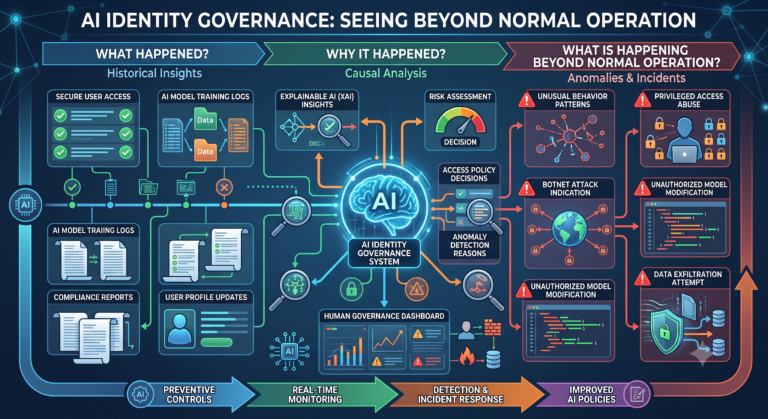
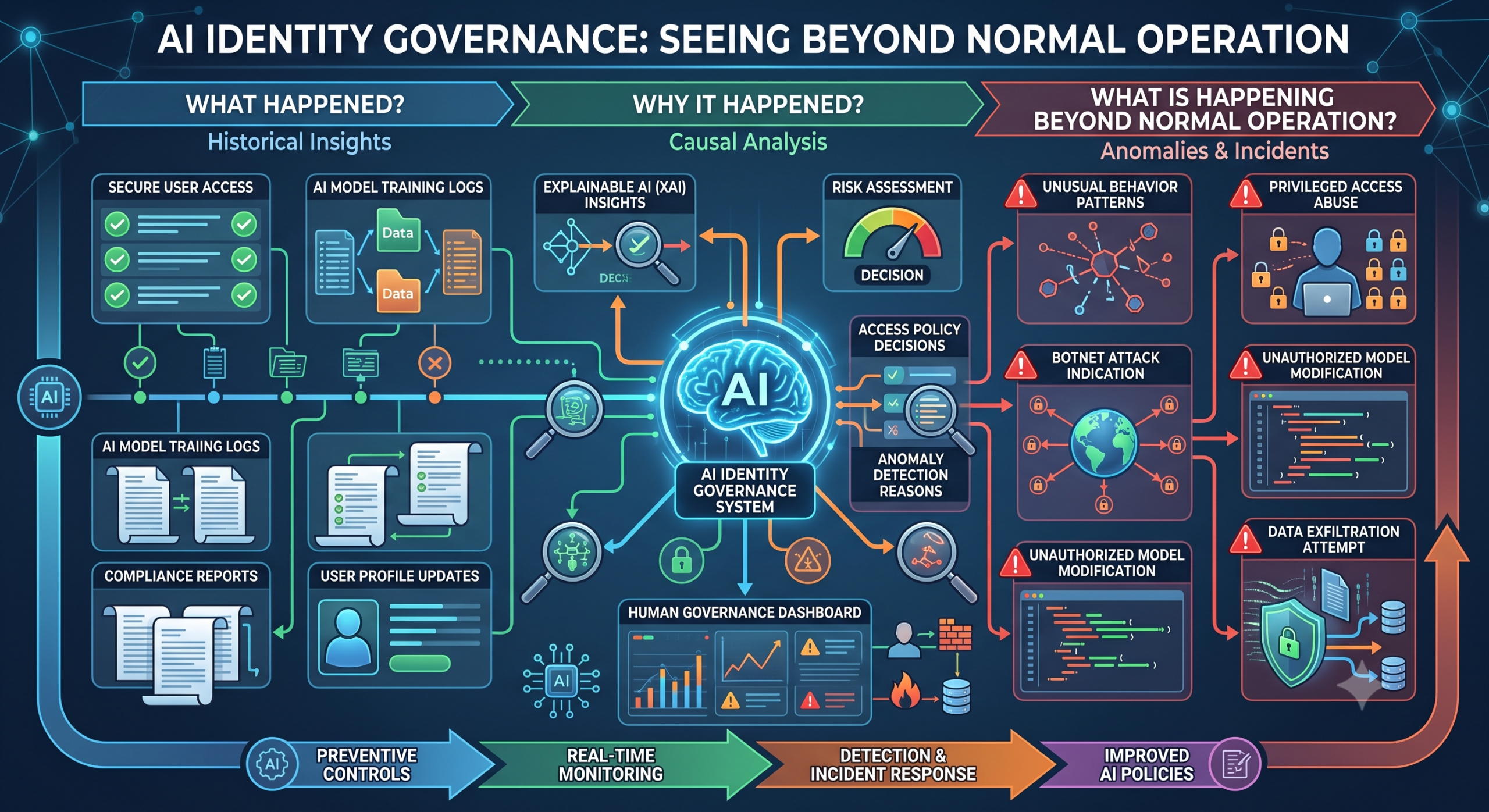
Traditional security logs answer what happened.
AI observability must answer why it happened.
That distinction fundamentally changes incident response.
The Rise of the AI Security Operations Center
Rather than replacing today’s SOC, many organizations will likely expand it into what could be called an AI Security Operations Center (AI-SOC).
This environment combines traditional cybersecurity monitoring with continuous governance of autonomous systems.
An AI-SOC should continuously monitor several key operational areas.
AI Identity Activity
Every autonomous agent should possess a unique identity with its own lifecycle, permissions, authentication records, and behavioral history.
Security teams should know:
- When the agent authenticated
- Which credentials it used
- Which resources it accessed
- Whether its permissions changed
- Which human owner approved those permissions
This extends identity governance beyond employees to non-human identities that actively participate in business operations.
AI Decision Telemetry
Most organizations already collect application logs.
Few collect decision logs.
Decision telemetry records information such as:
- Original objective
- Available tools
- Selected tool
- Alternative options considered
- Risk evaluation
- Policy validation
- Final action
While not every reasoning step requires permanent storage, maintaining sufficient decision evidence dramatically improves incident investigations and compliance reporting.
AI Behavioral Analytics
Behavioral analytics has become an essential capability for detecting compromised user accounts.
The same concept applies to autonomous AI.
Security teams should establish expected behavioral baselines for every production AI system.
Examples include:
- Typical working hours
- Common APIs
- Normal transaction volume
- Expected cloud resources
- Standard response times
- Historical reasoning patterns
- Approved external services
Once those baselines exist, deviations become meaningful security indicators.
Zero Trust Was Built for This Moment
Many organizations still associate Zero Trust primarily with multi-factor authentication or network segmentation.
In reality, Zero Trust is a philosophy that continuously validates trust rather than assuming it.
Autonomous AI reinforces nearly every principle behind Zero Trust Architecture.
Every AI request should be evaluated based on:
- Identity
- Device
- Context
- Requested resource
- Current risk
- Business justification
- Environmental conditions
Access decisions should become increasingly dynamic rather than relying on static permission models established months earlier.
The National Institute of Standards and Technology (NIST) describes Zero Trust as eliminating implicit trust while continuously evaluating requests throughout a transaction. Those principles naturally extend to autonomous AI systems that operate across enterprise environments.
Continuous Compliance Is Becoming Continuous Governance
One of the biggest lessons from FedRAMP over the past decade is that compliance cannot remain a point-in-time activity.
Cloud environments change continuously.
Security configurations evolve.
Infrastructure scales automatically.
Software updates occur daily.
Compliance therefore became continuous.
Autonomous AI introduces another dimension.
Organizations must now validate not only cloud infrastructure but also AI behavior.
Instead of asking:
“Is this server configured correctly?”
Security teams may increasingly ask:
“Did this AI make an authorized decision?”
Those are fundamentally different validation problems.
The first examines infrastructure.
The second evaluates autonomous behavior.
Future governance platforms will likely perform both simultaneously.
What This Means for FedRAMP 20x
FedRAMP 20x represents a significant evolution in how cloud providers demonstrate security assurance.
Rather than relying exclusively on extensive documentation and periodic assessments, FedRAMP is moving toward automation, machine-readable evidence, continuous validation, and real-time security posture.
Those same concepts naturally align with governing autonomous AI.
Imagine future evidence collection including:
- AI identity inventories
- Agent permission mappings
- Tool authorization records
- Autonomous workflow approvals
- Behavioral baseline reports
- Decision audit trails
- Continuous policy validation
- AI memory integrity verification
Many of these artifacts could eventually become machine-generated evidence rather than manually prepared documentation.
This shift supports the broader industry movement toward continuous authorization rather than periodic compliance exercises.
For organizations already investing in FedRAMP automation, adding AI governance capabilities may become a logical extension rather than an entirely separate program.
AI Needs Its Own Control Families
Traditional security frameworks organize controls into familiar categories.
Examples include:
- Access Control
- Audit and Accountability
- Configuration Management
- Incident Response
- Risk Assessment
- System Integrity
- Contingency Planning
Autonomous AI introduces security considerations that span many of these families while also suggesting entirely new governance domains.
Future AI-specific controls may include areas such as:
AI Identity Governance
Maintaining inventories of autonomous agents, assigned roles, ownership, lifecycle management, and authentication mechanisms.
AI Tool Authorization
Ensuring AI systems invoke only approved tools within defined operational boundaries.
AI Behavioral Monitoring
Continuously validating autonomous actions against established behavioral baselines.
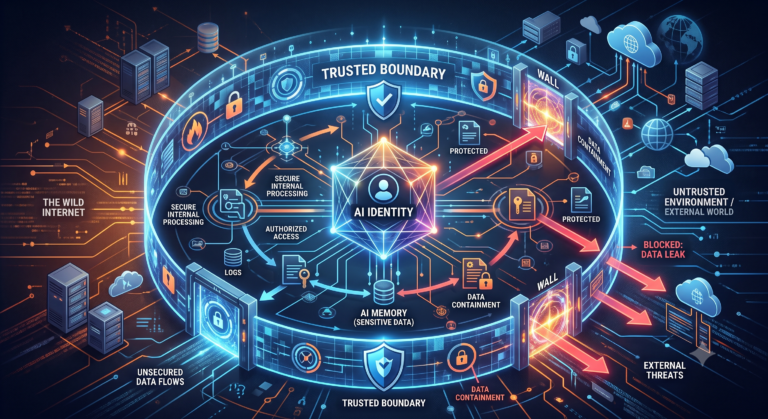
AI Memory Protection
Protecting persistent memory from unauthorized modification or corruption.
AI Decision Accountability
Recording sufficient evidence to explain high-impact autonomous decisions.
AI Safety Validation
Testing AI systems against misuse scenarios, adversarial inputs, prompt injection, and policy violations before production deployment.
Although existing frameworks already address many underlying cybersecurity principles, AI-specific implementation guidance will likely continue to mature over the coming years.
Human Oversight Remains Essential
Autonomous does not mean unsupervised.
One of the greatest misconceptions surrounding AI is that organizations should eliminate human involvement entirely.
The opposite is more likely to prove successful.
Humans will increasingly transition from executing every operational task to supervising autonomous systems.
Security analysts may spend less time manually reviewing firewall logs and more time validating AI-generated recommendations.
Compliance officers may review AI-produced evidence instead of assembling documentation manually.
Cloud engineers may approve AI-generated infrastructure changes rather than writing every deployment script themselves.
Human expertise shifts upward.
Operational speed increases.
Governance becomes even more important.
Building Trust Through Explainability
Regulated industries cannot simply accept that “the AI decided.”
Executives, regulators, auditors, and customers expect organizations to explain security decisions.
This requirement makes explainability a foundational cybersecurity capability rather than merely an AI research topic.
Organizations should strive to answer questions such as:
- Why was this action taken?
- Which information influenced the decision?
- Which policies were evaluated?
- Which alternatives were rejected?
- Who approved deployment?
- Can the decision be reproduced?
Explainability strengthens more than compliance.
It also increases organizational trust.
Security leaders are far more likely to deploy autonomous systems when they understand how those systems reach important decisions.
Preparing the Workforce for AI Governance
Technology alone will not solve this challenge.
Security professionals must develop new skills that combine traditional cybersecurity with AI governance.
Future SOC analysts may need familiarity with:
- Large language model architectures
- Prompt injection techniques
- AI tool orchestration
- Model lifecycle management
- AI behavioral analytics
- Machine identity governance
- AI observability platforms
- AI risk assessment methodologies
Similarly, compliance professionals will increasingly evaluate both technical controls and autonomous decision processes.
The organizations that invest early in workforce development will be better positioned to deploy AI responsibly while maintaining strong security and regulatory compliance.
Security Leadership Must Move Before Regulations Catch Up
Historically, cybersecurity regulations have followed technological innovation.
Cloud adoption accelerated before FedRAMP matured.
Mobile computing expanded before enterprise mobile security became standardized.
Software supply chain attacks increased before Software Bills of Materials (SBOMs) gained widespread attention.
Autonomous AI appears to be following a similar trajectory.
Organizations deploying agentic AI today should not wait for future regulations to define every required safeguard.
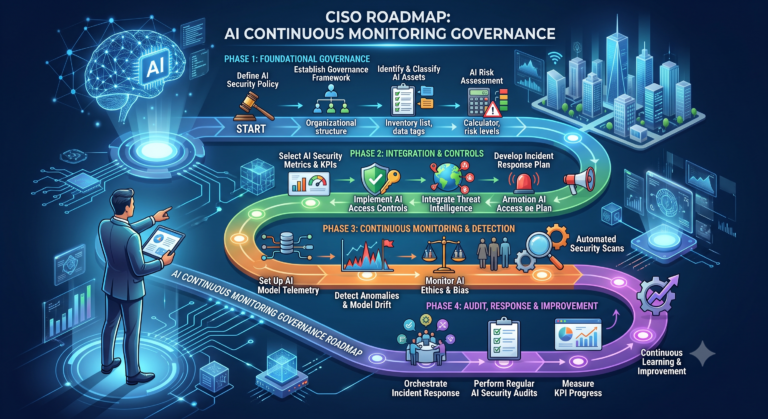
Instead, CISOs should proactively establish governance frameworks built on proven cybersecurity principles:
- Least privilege
- Zero Trust
- Continuous monitoring
- Strong identity management
- Comprehensive logging
- Risk-based approvals
- Independent validation
- Continuous improvement
These concepts remain just as relevant for autonomous systems as they have been for traditional IT.
The difference is the speed, scale, and complexity at which AI can operate.
The Next Competitive Advantage Will Be Trusted Autonomy
Organizations often compete based on innovation, operational efficiency, and customer experience.
Increasingly, they will also compete based on trust.
Customers, federal agencies, and business partners will ask difficult questions:
- How do you govern autonomous AI?
- Can you explain AI decisions?
- How do you prevent unauthorized AI actions?
- How do you monitor AI continuously?
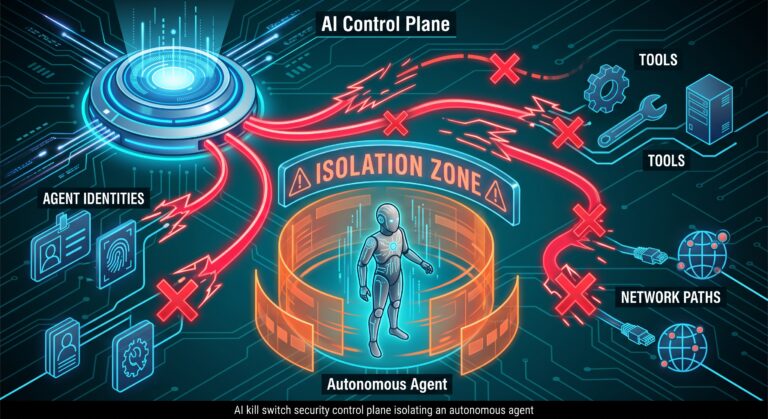
- Can you rapidly disable an AI agent during an incident?
The organizations with compelling answers will earn greater confidence from regulators, customers, and partners alike.
Trust has always been a cybersecurity objective.
In the age of autonomous AI, it may become the defining competitive advantage.
Key Takeaways
As organizations embrace agentic AI, security leaders should begin preparing now by:
- Treating autonomous AI agents as privileged digital identities.
- Extending Zero Trust principles to AI-driven workflows.
- Building AI observability into existing SOC operations.
- Implementing risk-based governance and human oversight for high-impact decisions.
- Expanding continuous compliance programs to include AI behavior and decision evidence.
- Preparing security teams with the skills needed to manage AI-native environments.
The evolution from cloud security to AI governance is already underway. Organizations that establish strong architectural foundations today will be far better prepared to adopt autonomous systems securely, responsibly, and at scale.
Coming in Part 4 (Conclusion): We’ll bring these concepts together into a practical executive roadmap for CISOs, outline the first five initiatives every organization should launch over the next 12 months, and explain why trusted autonomy may become the next defining pillar of enterprise cybersecurity.
About The Author