
Agentic AI and identity sprawl are creating unprecedented security risks that demand immediate attention from cybersecurity leaders. As organizations race to deploy autonomous AI systems, the multiplication of non-human identities is outpacing traditional controls, turning what was once a manageable identity problem into a potential enterprise-wide vulnerability. Experts warn that without proactive governance, compromised identities could cascade into widespread compromise at machine speed.
This convergence of agentic AI and identity sprawl represents one of the most significant shifts in the threat landscape for 2026 and beyond. Agentic AI refers to autonomous systems capable of planning, reasoning, and executing complex multi-step tasks with minimal human intervention. Unlike traditional AI tools that respond to prompts, these agents act as digital coworkers—accessing systems, making decisions, and interacting across your environment. When combined with existing identity sprawl, the result is a perfect storm of expanded attack surfaces and weakened perimeters.
The Rising Tide of Agentic AI in Enterprise Environments
The adoption of agentic AI is accelerating rapidly. Security professionals are already seeing pilots evolve into production deployments for tasks ranging from automated incident response to supply chain optimization and customer workflow orchestration. What makes these agents powerful—their autonomy—also makes them dangerous from a security perspective.
Rob Gregory, CISO at Optiv, emphasizes that identity has become the crucial perimeter in this new era. Even as concerns grow around vulnerabilities in frontier models, identity remains the primary attack vector. Nicole Carignan of Darktrace notes that predictions suggest 50 or more autonomous agents per human identity, each potentially carrying equivalent credentials and permissions.
This multiplication effect transforms a single compromised user account into a network of autonomous actors with broad access. If attackers gain control of one human identity, they could orchestrate dozens of agents to exfiltrate data, move laterally, or disrupt operations while blending into normal activity patterns.
Identity sprawl, the uncontrolled proliferation of accounts, credentials, service principals, and access tokens, has been a growing concern for years. Agentic AI supercharges this problem. Every new agent often generates additional OAuth tokens, API keys, service accounts, and delegated permissions. Many of these are created outside formal IT processes—creating “shadow AI” that security teams cannot see or govern.
Understanding Identity Sprawl in the Context of Agentic Systems
Traditional identity and access management (IAM) was designed primarily for human users with predictable behaviors and limited numbers. Agentic AI introduces non-human identities (NHIs) at scale. Research indicates NHIs already outnumber human identities significantly, with ratios reported as high as 144:1 in some environments, and agentic systems are pushing this higher.
Agent identities differ from standard machine identities in key ways:
- Autonomy and Adaptability: Agents can dynamically adjust their actions, request new permissions, or interact with unforeseen systems based on their reasoning.
- Long-Lived Sessions: Unlike short-lived API calls, agents may maintain persistent context and access across extended operations.
- Multi-Hop Delegation: An agent might delegate subtasks to other agents, creating complex chains of trust that are difficult to audit.
- Behavioral Variability: Their actions can evolve based on learning or prompt variations, making baseline anomaly detection more challenging.
This agentic AI and identity sprawl combination creates several specific risks. Over-provisioned permissions become common as agents are granted broad access “just in case” they need it for future tasks. Orphaned credentials accumulate when pilot projects end but associated identities remain active. Lateral movement becomes easier as agents naturally traverse systems while executing workflows.
Attackers increasingly target these identities through techniques like token theft, session hijacking, and prompt injection that tricks agents into performing malicious actions. A compromised agent can appear as legitimate internal activity, bypassing many traditional detection mechanisms.
Why Current IAM Approaches Fall Short
Legacy IAM systems struggle with agentic workloads for several reasons. Human-centric controls often fail to account for the volume, velocity, and variability of agent actions. Static role-based access control (RBAC) lacks the granularity needed for dynamic agent behaviors. Manual approval processes cannot scale to hundreds or thousands of agent identities.
Many organizations lack basic visibility into their agent inventory. Questions like “What agents do we have running?” “What do they have access to?” and “What actions can they perform?” remain difficult to answer definitively. David Bradbury, CSO at Okta, highlights these as the core questions that must be solved for secure agentic adoption. Okta’s “new blueprint for the secure agentic enterprise” focuses on discovery, access mapping, and capability governance.
Without proper lifecycle management, agents can persist beyond their useful life, accumulating standing privileges that represent significant risk. Traditional just-in-time (JIT) access controls designed for humans may not integrate seamlessly with agent orchestration platforms.
Expert Recommendations for Securing Agentic Identities
Security leaders stress extending proven identity practices to agents while adapting them for the new reality. Key principles include:
Implementing Robust Agent Lifecycle Management
Treat agents as first-class identities requiring full lifecycle governance. This includes formal approval processes for creation, regular attestation and review, automated deprovisioning when no longer needed, and clear ownership assignment. Gregory from Optiv recommends applying traditional IAM practices including approval workflows and lifecycle management to agent identities.
Enforcing Least Privilege for Agents
Agents should operate with the minimum permissions necessary for their specific tasks. Avoid broad, long-lived access tokens. Use just-in-time provisioning where possible, and implement fine-grained authorization that can adapt based on context. Regularly review and right-size permissions as agent capabilities evolve.
Continuous Monitoring and Behavioral Analysis
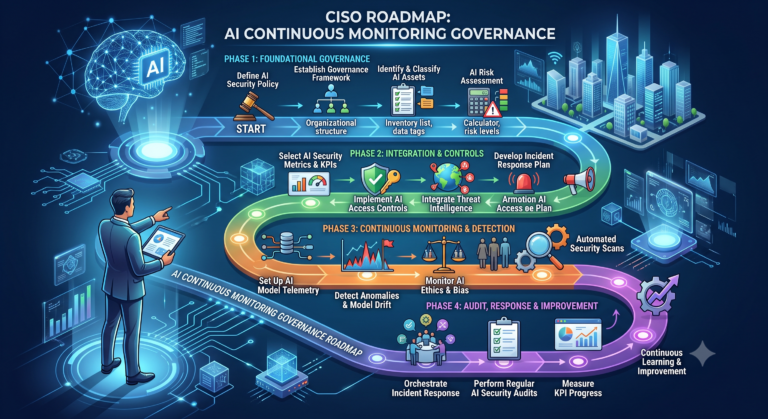
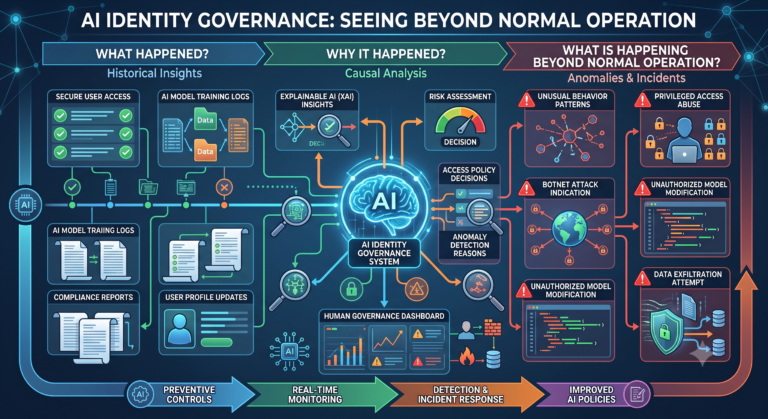
Static rules are insufficient. Organizations need behavioral analytics that baseline normal agent activity patterns and detect anomalies. This includes monitoring for unusual access requests, unexpected system interactions, or deviations from assigned tasks. Tools that combine identity context with AI-driven threat detection are becoming essential.
Strong Authentication and Credential Hygiene
Agents require robust authentication mechanisms such as certificate-based auth, workload identity federation, or cryptographic attestation. Eliminate long-lived secrets where possible. Rotate credentials automatically and implement strict secret management practices.
Related reading: NIST’s Digital Identity Guidelines (SP 800-63 Rev. 4) provide updated recommendations highly relevant to managing both human and non-human identities in modern environments. https://nvlpubs.nist.gov/nistpubs/SpecialPublications/NIST.SP.800-63-4.pdf
Building a Comprehensive Agentic AI Security Strategy
A mature strategy integrates several layers:
Discovery and Inventory: Deploy tools that automatically discover and catalog all agentic systems and their associated identities. This should include shadow AI detection capabilities.
Policy Enforcement: Define and enforce policies specific to agent behaviors. This includes acceptable use boundaries, data access restrictions, and interaction rules between agents.
Integration with Broader Security Architecture: Agent security cannot exist in isolation. It must connect with SIEM, SOAR, endpoint detection, cloud security posture management, and data loss prevention systems.
Incident Response Planning: Prepare playbooks specifically for agent-related incidents. How do you contain a rogue agent? How do you revoke access across delegated chains quickly?
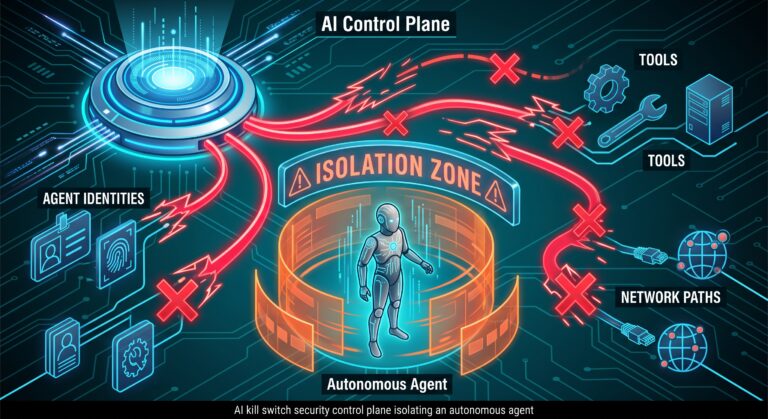
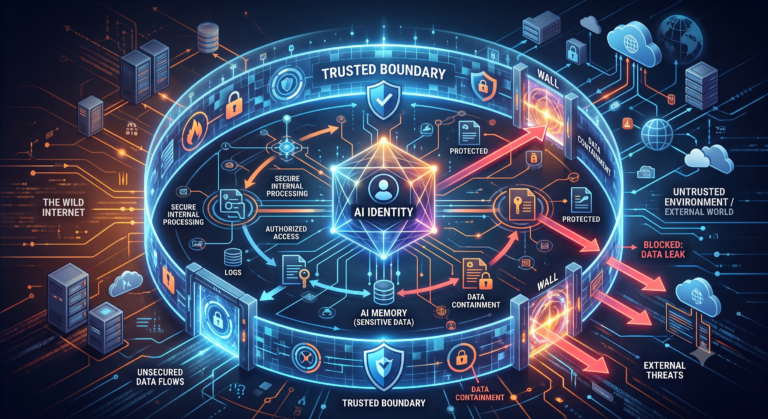
Organizations should also consider architectural isolation. Running agents in sandboxed environments with strict egress controls can limit blast radius. Using secure orchestration platforms with built-in governance features helps maintain control.
The Role of Standards and Frameworks
Forward-thinking organizations are aligning with established guidance while pushing for agent-specific extensions:
- NIST AI Risk Management Framework (AI RMF): Provides a structured approach to identifying and managing AI-related risks, including those from autonomous systems. https://www.nist.gov/itl/ai-risk-management-framework
- CISA AI Security Guidance: Offers practical recommendations for securing AI systems throughout their lifecycle. https://www.cisa.gov/
- NIST Digital Identity Guidelines: Updated standards crucial for modern identity management. https://www.nist.gov/identity-access-management
These frameworks emphasize governance, measurement, and continuous improvement—principles that apply directly to managing agentic AI and identity sprawl.
Real-World Implications and Case Considerations
While specific breach details involving agentic AI are still emerging, the patterns are clear. Identity-based attacks already dominate breach statistics. Adding autonomous agents multiplies the potential impact. A single compromised identity controlling multiple agents could enable rapid data exfiltration or system manipulation that outpaces human response times.
Financial services, healthcare, and critical infrastructure sectors face heightened risks due to regulatory requirements and the sensitivity of their data. However, every industry adopting agentic AI must address these challenges.
Consider a scenario where a supply chain optimization agent is compromised. It could manipulate orders, falsify inventory data, or exfiltrate sensitive partner information while appearing to perform normal functions. Detection becomes exponentially harder when legitimate agent behaviors include accessing multiple systems and making autonomous decisions.
Practical Steps for Cybersecurity Professionals
- Conduct an Agent Inventory Assessment: Map all current and planned agentic deployments and their identity dependencies.
- Review IAM Maturity: Evaluate your platform’s ability to handle non-human and agent identities at scale.
- Implement Discovery Tools: Deploy solutions that provide visibility into shadow AI and unmanaged identities.
- Develop Agent-Specific Policies: Create governance frameworks tailored to autonomous systems.
- Train Teams: Ensure security, identity, and AI teams understand the unique risks and controls required.
- Test Incident Response: Simulate agent compromise scenarios in tabletop exercises.
- Engage with Vendors: Work with identity, AI, and security providers developing agentic-specific solutions.
Future Outlook: Evolving with Agentic AI
The security community is actively developing new approaches. Concepts like agent attestation, dynamic authorization, and behavioral identity are gaining traction. We can expect more sophisticated platforms that treat agents as governed entities with verifiable provenance and constrained autonomy.
Success will depend on balancing innovation with security. Organizations that treat agentic AI and identity sprawl as a core governance issue—rather than a technology add-on—will be best positioned to realize the benefits while managing the risks.
The message from experts is clear: identity remains foundational. Extending identity best practices to the agentic world isn’t optional—it’s essential for maintaining security in the coming era of autonomous systems.
Cybersecurity professionals must lead this evolution, advocating for visibility, control, and accountability as their organizations embrace agentic capabilities. The perimeter has shifted. Identity is now the battleground, and agents are multiplying the stakes.
References Cited
- Why Agentic AI And Identity Sprawl Add Up To Massive Security Risk: Experts – CRN – https://www.crn.com/news/security/2026/why-agentic-ai-and-identity-sprawl-add-up-to-massive-security-risk-experts?itc=refresh
- NIST AI Risk Management Framework – https://www.nist.gov/itl/ai-risk-management-framework
- NIST Digital Identity Guidelines – https://www.nist.gov/identity-access-management
- AI Agent Sprawl Is the New Shadow IT – https://zenity.io/blog/security/incomplete-agent-inventory-risk
- Securing Every Identity in the Age of AI – Palo Alto Networks – https://www.paloaltonetworks.com/blog/2026/02/securing-every-identity-in-the-age-of-ai/
- Agentic AI Security: How Autonomous AI Redefines Identity – BeyondTrust – https://www.beyondtrust.com/blog/entry/agentic-ai-security
About The Author