
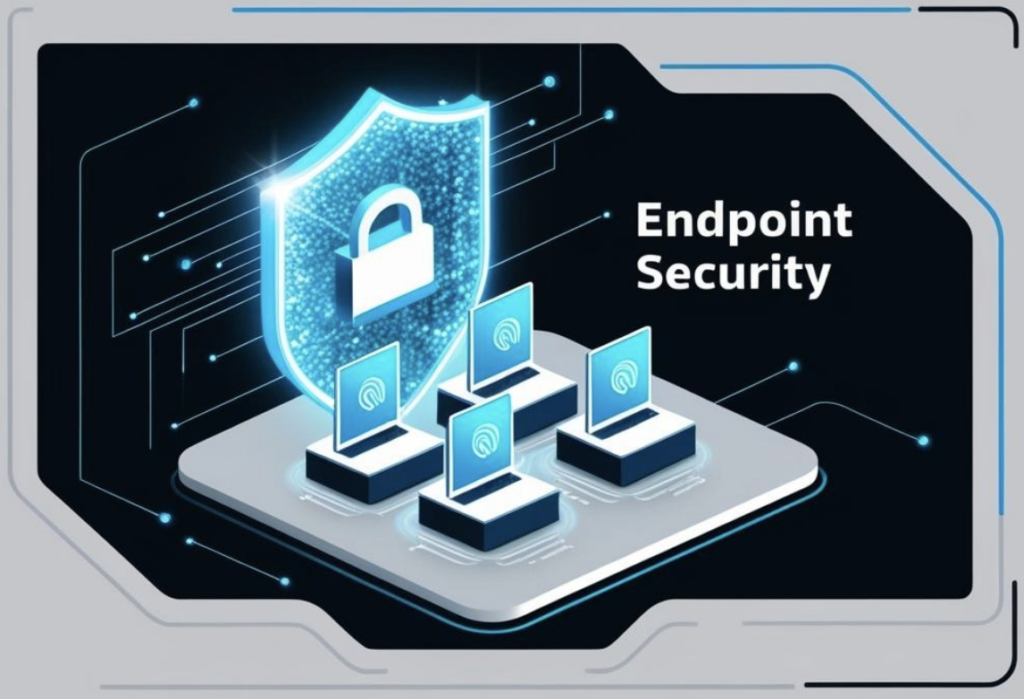
In a world where remote work, cloud computing, and mobile devices are the norm, securing endpoints is more critical than ever. Zero Trust Architecture (ZTA) mandates that no device should be implicitly trusted, making endpoint security and device trustworthiness essential pillars of modern cybersecurity strategies.
Hackers often exploit vulnerabilities in laptops, smartphones, IoT devices, and workstations to gain access to corporate networks. A Zero Trust model ensures that every device attempting to connect undergoes rigorous verification, continuous monitoring, and strict access controls before being granted access to resources. These strategies are foundational to effective endpoint security and device trustworthiness in Zero Trust.
What is Endpoint Security in Zero Trust?
Endpoint security in a Zero Trust model focuses on continuous device verification, proactive threat detection, and strict access control based on device health, identity, and compliance with security policies.
Key Principles of Endpoint Security in Zero Trust:
- Never trust a device by default, even if it’s corporate-issued.
- Continuously assess device security posture before granting access.
- Use AI-driven analytics to detect anomalies in endpoint behavior.
- Apply strict access controls to prevent compromised devices from spreading threats.
Example: An employee logging in from a personal laptop will undergo strict verification to check for up-to-date software, endpoint protection, and device compliance before being granted access to corporate applications.
Device Trustworthiness: Ensuring Secure Access
To implement Zero Trust, organizations must evaluate whether a device is secure and compliant before granting access.
Key Factors for Device Trustworthiness:
- Device identity and fingerprinting: Only known devices are granted access.
- Compliance enforcement: Devices must meet security policy requirements like encryption, antivirus, and patch levels.
- Endpoint Detection and Response (EDR/XDR): Monitors endpoint activity and detects suspicious behaviors in real time.
- Hardware-based security: Tools like TPM and Apple Secure Enclave protect cryptographic data.
- Zero Trust Network Access (ZTNA): Restricts access to only authorized apps and hides the rest of the network.
Example: If a device is missing security patches or has an outdated OS, it may be blocked or required to undergo remediation before gaining access.
How Endpoint Security Strengthens Zero Trust
Unlike traditional security models that trust devices inside the network, Zero Trust continuously enforces security measures based on risk and compliance. Endpoint security and device trustworthiness play a critical role in maintaining secure access across environments.
How it Works:
- Before Access: Devices undergo identity verification and compliance checks.
- During Access: Continuous monitoring ensures that devices do not exhibit suspicious behavior.
- After Access: Devices showing compromise signs (e.g., unusual network traffic) are quarantined or blocked.
Example: If an endpoint suddenly starts communicating with an unknown IP address, Zero Trust policies can automatically revoke access and isolate the device to prevent a data breach.
Key Technologies for Endpoint Security in Zero Trust
Organizations can implement endpoint security by integrating the following technologies:
- Zero Trust Network Access (ZTNA): Enforces access policies based on trust levels.
- Mobile Device Management (MDM): Manages device configurations and enforces security.
- Endpoint Detection & Response (EDR): Provides real-time threat mitigation.
- Secure Access Service Edge (SASE): Combines networking and security in a cloud-delivered solution.
- AI-Powered Behavioral Analytics: Detects unusual device behavior.
Example: If a corporate laptop is stolen, MDM tools can enforce a remote wipe, while ZTNA revokes access instantly.
Benefits of Endpoint Security in Zero Trust
- Prevents unauthorized device access
- Reduces attack surface through strict compliance enforcement
- Detects insider threats using real-time monitoring
- Supports remote work with device-level authentication
- Improves threat detection with AI-driven analytics
Best Practices for Implementing Endpoint Security in Zero Trust
- Enable Multi-Factor Authentication (MFA) for all device logins.
- Implement Mobile Device Management (MDM) for remote security enforcement.
- Deploy Zero Trust Network Access (ZTNA) to restrict unauthorized access.
- Use Endpoint Detection & Response (EDR) for real-time attack mitigation.
- Monitor device behavior using AI-driven analytics to detect threats.
- Regularly audit and update device security policies.
Conclusion
In a Zero Trust model, devices are not automatically trusted—they must continually prove their security posture before gaining access. Endpoint security and device trustworthiness are critical for ensuring that only secure, compliant, and monitored devices interact with corporate networks and applications.
Unauthorized devices are blocked from accessing sensitive applications, while compliant devices are permitted to interact with critical systems. Enforcing strict compliance policies significantly reduces the attack surface and minimizes risk. Real-time monitoring helps detect and mitigate insider threats as they emerge, keeping data secure. For remote workers, device-based authentication maintains seamless yet robust protection. Enhanced by AI-driven analytics and ongoing monitoring, threat detection becomes smarter, faster, and more adaptive.
By implementing ZTNA, EDR, and AI-driven monitoring, organizations can reduce attack surfaces, prevent breaches, and protect their most critical assets from cyber threats.
References Cited:
- NIST 800-207
- IBM – AI Security
- CrowdStrike – EDR vs XDR
- Microsoft – TPM Overview
- Apple – Secure Enclave
- Cloudflare – What is ZTNA?
- Zscaler – ZTNA
- Microsoft Intune – MDM
- SentinelOne – Endpoint Security
- Gartner – What is SASE?
- Palo Alto Networks – Cortex XDR
About The Author