
[This is the first article in the government cybersecurity and critical infrastructure protection series]
Cyberattacks targeting government systems and critical infrastructure have grown in complexity, frequency, and impact. In this climate, traditional perimeter-based security models are no longer sufficient. As cyber threats become more advanced, government agencies must pivot toward an adaptive and robust security paradigm—Zero Trust Architecture (ZTA).
The Zero Trust model operates on the principle of “never trust, always verify.” It shifts the focus from network perimeter defense to continuous verification of identity, device integrity, and access context. This approach is essential to reinforcing national cybersecurity defenses and safeguarding both public-sector operations and private-sector dependencies.
This article explores how Zero Trust can fortify government IT environments, how it supports national cyber resilience, and why its implementation is critical for the future of public-sector cybersecurity.
Why Government Cybersecurity Requires a Zero Trust Approach
Government networks store and transmit high-value data—from intelligence assessments to health records. Legacy systems and broad access privileges make them vulnerable to insider threats, credential theft, and lateral movement attacks. Adopting a Zero Trust model addresses these weaknesses by:
- Minimizing implicit trust within networks
- Segmenting access to limit breach scope
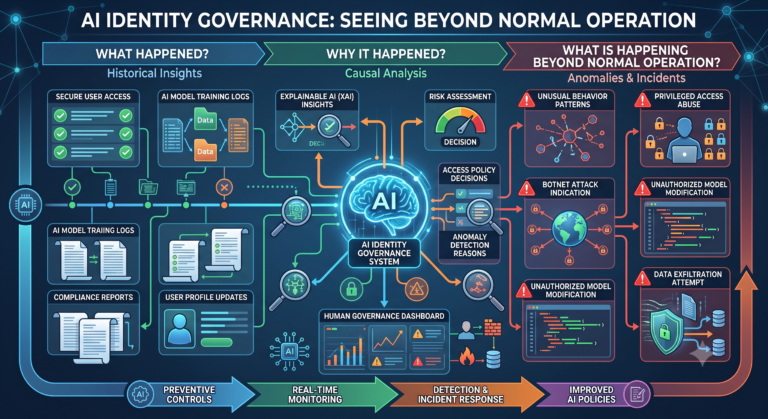
- Monitoring continuously for anomalous behavior
The U.S. federal government recognized this need with establishing the Office of the National Cyber Director (2021), which also supports federal agencies to adopt Zero Trust practices[1]. This policy shift acknowledges that conventional defenses cannot withstand modern attack vectors like phishing, supply chain exploits, or compromised credentials.
Key Components of Zero Trust Security for Government Networks
Identity-Centric Security and Continuous Verification
At the core of ZTA is strict identity and access management (IAM). Users must be authenticated and authorized for every action using:
- Multi-Factor Authentication (MFA)
- Role-Based Access Control (RBAC)
- Contextual policies (time, location, device type)
For example, a contractor accessing a DoD application from an unfamiliar location may be flagged for additional verification or denied access entirely.
Microsegmentation to Contain Threats
Zero Trust calls for microsegmentation, which divides networks into secure zones and enforces granular policies. If an attacker compromises one part of a network, microsegmentation prevents them from freely moving laterally to sensitive areas.
This approach was critical in mitigating damage during the Log4j vulnerability response, where agencies using segmentation could isolate affected components without compromising entire systems[2].
Device Trust and Endpoint Security
Devices connecting to government networks must meet health and compliance standards. This means implementing endpoint detection and response (EDR) and ensuring real-time device posture assessments.
Government agencies are increasingly deploying tools like Microsoft Defender for Endpoint or CrowdStrike Falcon to meet these Zero Trust endpoint security requirements.
Least Privilege and Just-In-Time Access
The principle of least privilege access limits users to only the resources they need. When paired with Just-In-Time (JIT) access provisioning, it reduces the attack surface drastically.
This concept is vital for large federal agencies with thousands of employees and contractors accessing mission-critical systems.
National Security Benefits of Zero Trust Cyber Defense Strategies
Mitigating Advanced Persistent Threats (APTs)
Nation-state attackers like Russia’s APT29 or China’s APT41 have demonstrated capabilities to infiltrate and dwell in networks undetected for months. Zero Trust’s real-time monitoring and denial-by-default policies make long-term persistence much harder for adversaries[3].
Protecting Critical Infrastructure Through Interagency Consistency
Critical infrastructure systems—like power grids, water treatment facilities, and transportation—are often managed through public-private partnerships. A breach in one agency can ripple out across sectors. Standardizing Zero Trust policies across government entities creates consistent cyber hygiene that benefits:
- National defense coordination
- Emergency response systems
- Secure data sharing with civilian infrastructure providers
Enhancing Incident Response and Forensics
Zero Trust systems generate comprehensive audit trails and telemetry logs. When a breach occurs, forensic investigations are faster and more accurate, enabling agencies to respond rapidly and reduce dwell time.
During the SolarWinds breach, insufficient visibility into lateral movement delayed mitigation. ZTA could have isolated compromised nodes more effectively[4].
Challenges to Implementing Zero Trust in Public Sector IT
Legacy Systems and Technical Debt
Many government agencies still rely on legacy systems incompatible with Zero Trust controls. Retrofitting old architecture with modern authentication and segmentation tools requires time, funding, and expertise.
Budget Constraints and Resource Allocation
Smaller agencies and municipalities often lack the resources to implement Zero Trust at scale. The Technology Modernization Fund (TMF) helps address this by offering grants to upgrade federal IT systems, but gaps remain.
Cultural Resistance and Policy Inertia
Adopting Zero Trust means dismantling outdated assumptions about trusted users and networks. Organizational resistance, lack of training, and unclear mandates can stall adoption.
A successful transition requires clear leadership directives, dedicated cyber training, and phased implementation strategies.
How to Operationalize Zero Trust in Federal Environments
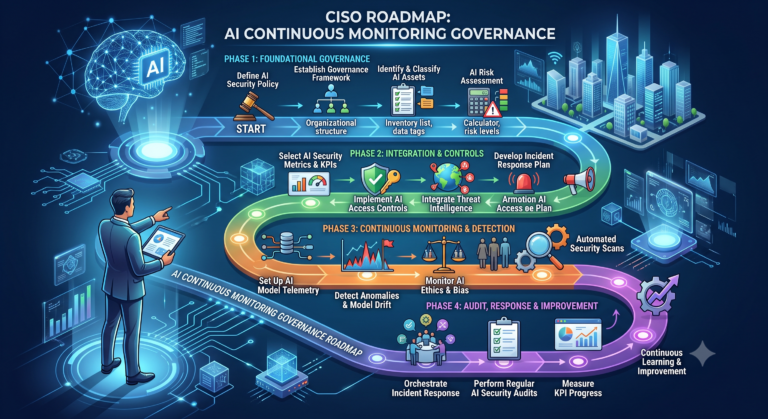
Step 1: Establish a Zero Trust Maturity Model
Use frameworks like CISA’s Zero Trust Maturity Model[5] to benchmark progress across identity, devices, networks, applications, and data. This roadmap provides measurable steps for federal agencies at various levels of readiness.
Step 2: Inventory Assets and Classify Data
Before applying controls, agencies must know what they’re protecting. This involves asset discovery, data classification, and mapping data flows between systems and users.
Step 3: Prioritize High-Risk Areas
Not all systems can be modernized simultaneously. Agencies should focus first on high-value targets (HVTs), such as classified data repositories, financial systems, and command/control platforms.
Step 4: Implement Continuous Monitoring and Adaptive Policies
Deploy security analytics, behavioral monitoring, and automated response tools. ZTA depends on real-time data to enforce policy changes, detect anomalies, and respond to threats automatically.
Private Sector Lessons for Government Zero Trust Deployment
Leading enterprises like Google (with BeyondCorp) and Microsoft have already adopted Zero Trust models at scale. Government agencies can learn from these implementations by:
- Utilizing cloud-native security tools (e.g., Azure AD, AWS IAM)
- Adopting automation for provisioning and revocation of privileges
- Conducting regular penetration tests and red team assessments
Private-sector frameworks can accelerate government adoption by offering proven playbooks and reference architectures that reduce deployment complexity.
The Road Ahead: Strengthening National Cyber Resilience with Zero Trust
Zero Trust is not a one-time deployment—it is an evolving security philosophy. As the threat landscape continues to shift, this model offers flexibility, adaptability, and stronger control over system access and user behavior.
A unified, federal-wide Zero Trust strategy would not only improve cybersecurity posture within government but would also enhance trust and security in data exchanges with the private sector, supply chain partners, and allied nations.
When paired with workforce training, strong leadership, and clear interagency coordination, Zero Trust becomes a cornerstone for defending national interests in cyberspace.
References Cited:
Office Of the National Cyber Director – https://www.whitehouse.gov/oncd/
Apache Log4j Vulnerability Guidance – Cybersecurity and Infrastructure Security Agency (CISA) – https://www.cisa.gov/news-events/news/apache-log4j-vulnerability-guidance
MITRE ATT&CK®: APT29 – https://attack.mitre.org/groups/G0016/
SolarWinds Cyberattack Demands Significant Federal and Private-Sector Response – U.S. Government Accountability Office (GAO) – https://www.gao.gov/blog/solarwinds-cyberattack-demands-significant-federal-and-private-sector-response-infographic
Zero Trust Maturity Model – Cybersecurity and Infrastructure Security Agency (CISA) – https://www.cisa.gov/zero-trust-maturity-model
About The Author