Introduction
In the early days of cloud computing, security was often seen as the department of “no.” But today’s cloud-native environments demand that we evolve this thinking. As security leaders, we are no longer gatekeepers—we’re enablers of transformation. Cloud security is not about bottlenecks; it’s about building highways that allow innovation to move fast safely.
The question we need to ask isn’t “how do we say no?” but “how do we say yes—safely?” This mindset shift is essential in an era where developers, engineers, and operators expect security to move at the speed of code.

A Cloud-Native Security Philosophy
I’ve had the privilege of serving as a principal security architect at AWS, and through that lens, I’ve learned that cloud-native security is not just a technical construct—it’s cultural. It’s about aligning people, process, and technology to enable secure outcomes without slowing innovation. Security should feel like a tailwind, not a headwind.
Here’s what that looks like in practice:
| Principle | Cloud-Native Security Practice |
|---|---|
| Shared Responsibility | Build cross-functional partnerships across orgs. |
| Scalability | Automate responses and monitoring to reduce human bottlenecks. |
| Inclusivity | Design security systems that are intuitive for developers, not just security pros. |
| Evolution | Embrace continuous learning and iteration. The threat landscape isn’t static—neither can we be. |
Reframing the Security Narrative
Too often, security is reactive. But if we wait until something breaks, we’ve already lost the trust that powers innovation. Instead, cloud security should be proactive, embedded, and continuous.
Let’s reframe the narrative:
“Security is a team sport. And in the cloud, everyone has a jersey.”
This means giving developers the tools to make secure decisions. It means integrating security checks into CI/CD pipelines. And it means prioritizing education as much as enforcement.
Building High-Trust Environments
Security at scale isn’t just about tooling. It’s about trust. High-trust environments breed high-performance outcomes. That trust starts with transparency. Whether it’s the results of a threat modeling exercise or the risks identified in a new service launch, the best security teams err on the side of sharing—early and often.
Here are a few practical approaches:
- Create Security Champions: Embed them in engineering teams. Empower them. Support them.
- Feedback Loops: Build retrospective processes where security failures are analyzed constructively, not punitively.
- Just Enough Governance: Apply controls contextually. Don’t over-engineer where risk is low.
This balance of autonomy and accountability is the sweet spot.
Designing for the Future, Not the Past
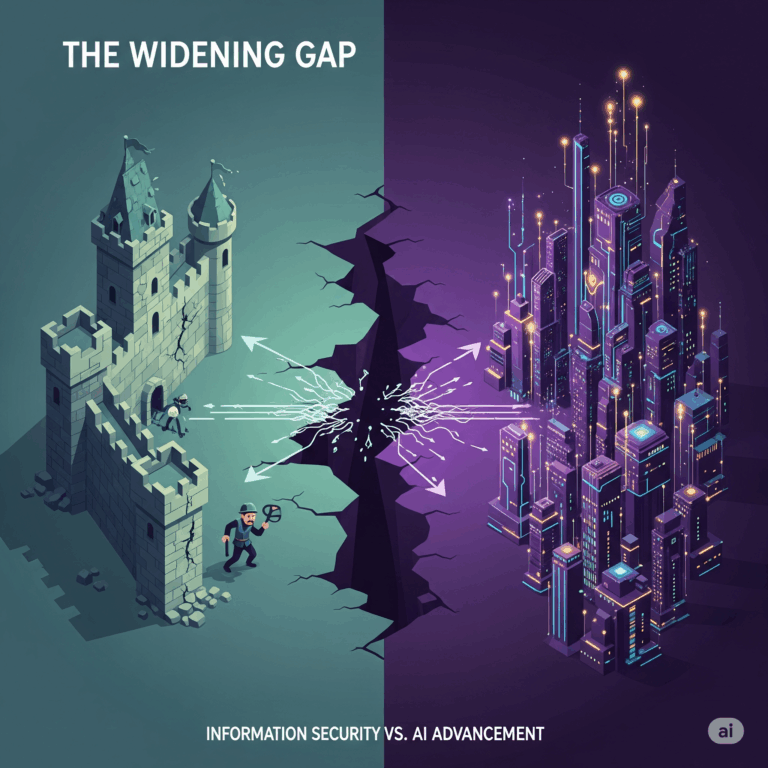
Traditional security models are built around perimeter defense—build a bigger wall, lock the doors tighter. But the cloud is not a castle. It’s a living ecosystem of APIs, services, and ephemeral compute.
So, we need a new playbook.
Embrace Ephemerality
The fact that resources are short-lived in the cloud is a feature, not a bug. We should lean into this:
- Automate resource creation and teardown.
- Assume that any instance could disappear—and build systems resilient to that.
Infrastructure as Code (IaC) is Security as Code
IaC isn’t just about efficiency—it’s about audibility and repeatability. When your infrastructure is declarative, it’s inspectable. You can apply security policies before deployment, not after.
Inclusion as a Security Imperative
Security cannot be exclusive. The best security cultures are inclusive—diverse in thought, background, and approach. This isn’t just a value statement; it’s a strategic advantage.
When your team represents the world, you’re better equipped to secure it.
Steps toward inclusion in security:
- Democratize Knowledge: Security shouldn’t live in a silo. Create open channels for learning.
- Reward Curiosity: Celebrate the engineers who file security bugs. Invite them into the solution.
- Design with Empathy: Build interfaces and guidance that make secure behaviors easier than insecure ones.
Metrics That Matter
In the cloud, you can’t improve what you can’t measure. But vanity metrics—like the number of policies written—don’t reflect true security outcomes.
Here’s what we should measure:
| Metric | Why It Matters |
|---|---|
| Time to Patch | Reflects operational responsiveness to risk. |
| Developer Satisfaction | Security must serve the builder experience. |
| Mean Time to Detect/Respond | Directly linked to breach impact. |
| Number of Misconfigurations Resolved Proactively | Demonstrates maturity in preventive controls. |
Data tells a story. Make sure it’s the right one.
Conclusion: Security is the Ultimate Enabler
We’re living in a moment of massive opportunity. The cloud is democratizing access to innovation. But with great power comes great responsibility—and that’s where security comes in.
If we do our jobs right, security won’t be the thing that slows us down. It will be the reason we can move faster, safer, and smarter.
Let’s build that future—together.
References:
FedNinjas Podcast.”Framing Cybersecurity Risk for Business Professionals – With Merritt Baer.”2024
About The Author