Skip to content
The FedNinjas

The Fedninjas

FedNinjas: Your Guide to Federal Cloud, Cybersecurity, and FedRAMP Success.

Primary Menu
  • Home
  • Blog
  • Podcast
Listen to us on Spotify!

Digital Twins and Their Cybersecurity Implications

FedNinjas Team May 8, 2025 4 minutes read

Unlocking the Power of Virtual Replicas

The rapid advancement of digital technologies has led to the emergence of innovative concepts that are transforming various industries. One such concept is digital twins, which have gained significant traction in sectors such as manufacturing, and infrastructure development. A digital twin is a virtual replica of a physical object or system, allowing for real-time monitoring, simulation, and analysis. While digital twins offer immense benefits, they also introduce new risks and vulnerabilities, particularly in the realm of cybersecurity.

Illustration of digital twin architecture and city infrastructure, highlighting potential cybersecurity risks and vulnerabilities.

Digital Twins and Cybersecurity

The integration of digital twins with physical systems has created a complex ecosystem that requires robust cybersecurity measures to prevent potential threats. Cybersecurity implications of digital twins can be far-reaching, affecting not only the digital replica but also the physical system it is connected to. One of the primary concerns is the potential for cyber attacks to compromise the integrity of the digital twin, which could have a ripple effect on the physical system.

Moreover, digital twins present a unique challenge in terms of data security. The constant flow of data between the physical system and the digital twin creates a vast attack surface, making it vulnerable to data breaches and cyber attacks. Furthermore, the use of advanced technologies such as artificial intelligence (AI) and the Internet of Things (IoT) in digital twins introduces additional risks, including the potential for AI-powered cyber attacks.

Cybersecurity Risks and Challenges

The adoption of digital twins has brought forth a new set of cybersecurity challenges that require immediate attention of organizations and policymakers alike. Some of the key risks and challenges include:

Vulnerabilities in Digital Twin Architecture

The architecture of digital twins is inherently complex, comprising various components and systems. This complexity creates vulnerabilities that can be exploited by cyber criminals. For instance, a vulnerability in the data transmission protocol could allow hackers to intercept and manipulate data, leading to devastating consequences.

According to the Cybersecurity and Infrastructure Security Agency (CISA), vulnerable digital twin architecture can provide an entry point for cyber attacks, allowing hackers to gain access to critical infrastructure. It is essential to conduct thorough risk assessments and vulnerability testing to identify and mitigate potential threats.

Lack of Standardization and Regulation

The digital twin market is still in its nascent stage, and the lack of standardization and regulation creates an environment conducive to cyber threats. The absence of strict regulations and standards leads to inconsistent security practices, making it challenging to ensure the integrity of digital twins.

A recent report by the National Institute of Standards and Technology (NIST) highlights the need for standardization and regulation in the digital twin industry. The report emphasizes the importance of developing guidelines for secure digital twin development, deployment, and operation.

Secure Digital Twin Development

The development of secure digital twin requires a comprehensive approach that encompasses multiple aspects, including design, testing, and operation. Cybersecurity must be integrated into every stage of digital twin development, from the initial design phase to the final deployment and operation.

Organizations must adopt a proactive approach to cybersecurity, incorporating robust security measures, secure data transmission protocols, and advanced threat detection systems. Moreover, it is essential to conduct regular security audits and penetration testing to identify vulnerabilities and address them promptly.

Conclusion

The rapid adoption of digital twins has transformed various industries, offering immense benefits and opportunities. However, the cybersecurity implications of digital twins cannot be ignored. It is essential to acknowledge the potential risks and vulnerabilities associated with digital twins and develop robust cybersecurity measures to mitigate these risks.

In conclusion, digital twins have the potential to revolutionize various industries, but it is crucial to address the cybersecurity implications associated with them. By adopting a proactive approach to cybersecurity and addressing the challenges and risks, organizations can harness the full potential of digital twins while ensuring the security and integrity of critical infrastructure.

References Cited

1. Cybersecurity and Infrastructure Security Agency (CISA)
2. National Institute of Standards and Technology (NIST)

About The Author

FedNinjas Team

See author's posts

Post navigation

Previous: How Dwell Time Impacts Breach Severity
Next: Mission: Cyber Secure – How the OMB and GSA Are Powering a New Era of Federal Cybersecurity

Related Stories

AI-orchestrated-cyber-espionage-campaign

The Rise of AI Espionage: How Autonomous Agents Are Redefining Cyber Threats

Eric Adams November 17, 2025
AI attack red team

Exposing Cloud and IoT Systems Using the GPT-5 Jailbreak and Zero-Click AI Agent Attacks

Eric Adams August 11, 2025
Global AI Regulation

The Global Race for AI Regulation

Maurice Matsumori June 8, 2025

Trending News

Agentic AI and Identity Sprawl: The New Security Risk NHI Agent Sprawl 1

Agentic AI and Identity Sprawl: The New Security Risk

June 1, 2026
Claude Mythos and Project Glasswing: a Seismic Shift in Cybersecurity Claude Mythos and Glasswing Butterfly 2

Claude Mythos and Project Glasswing: a Seismic Shift in Cybersecurity

April 21, 2026
The Stryker Cyber Attack: A Mass Remote Wipe of its Managed Devices Stryker affected countries 3

The Stryker Cyber Attack: A Mass Remote Wipe of its Managed Devices

March 19, 2026
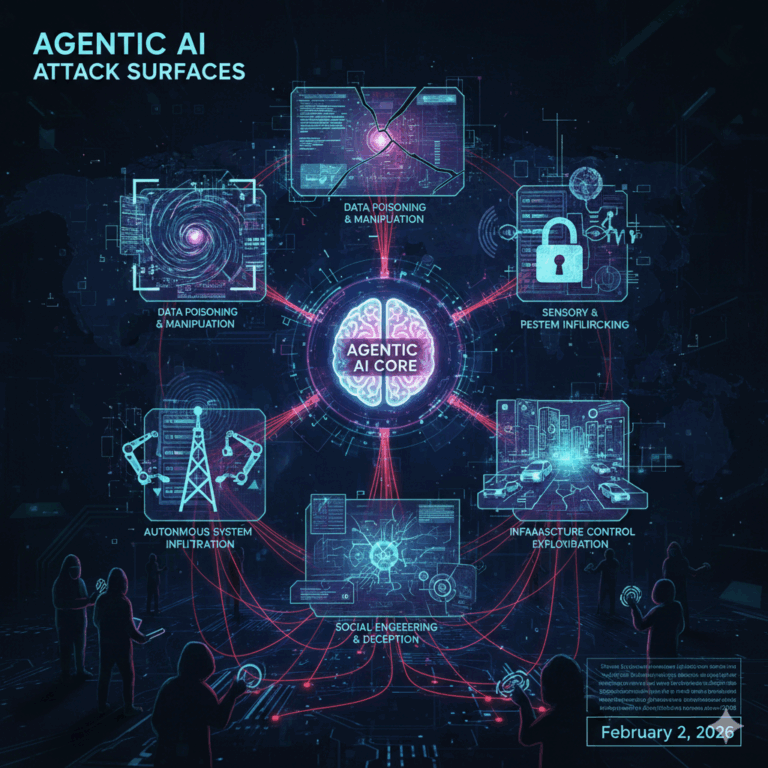
Agentic AI is the Attack Surface Agentic AI attack surfaces 4

Agentic AI is the Attack Surface

February 3, 2026
The Rise of Humanoid Robots in Modern Society Humanoid robots getting hackied 5

The Rise of Humanoid Robots in Modern Society

December 29, 2025
  • 3PAO assessments
  • Access Control
  • Advanced Threat Protection
  • Adversarial Modeling
  • Agentic AI
  • AI
  • AI and Quantum Computing
  • AI in Healthcare
  • AI-Powered SOCs
  • AI-Powered Tools
  • Anomaly Detection
  • API Security
  • Application Security
  • Artificial Intelligence
  • Artificial Intelligence
  • Artificial Intelligence in Cybersecurity
  • Attack Surface Management
  • Attack Surface Reduction
  • Audit and Compliance
  • Autonomous Systems
  • Blockchain
  • Breach Severity
  • Business
  • Career
  • CISA Advisory
  • CISO
  • CISO Strategies
  • Cloud
  • Cloud Computing
  • Cloud Security
  • Cloud Security
  • Cloud Service Providers
  • Compliance
  • Compliance And Governance
  • Compliance and Regulatory Affairs
  • Compliance And Regulatory Requirements
  • Continuous Monitoring
  • Continuous Monitoring
  • Corporate Security
  • Critical Infrastructure
  • Cross-Agency Collaboration
  • Cryptocurrency
  • Cyber Attack
  • Cyber Attacks
  • Cyber Deterrence
  • Cyber Resilience
  • Cyber Threats
  • Cyber-Physical Systems
  • Cyberattacks.
  • Cybercrime
  • Cybersecurity
  • Cybersecurity And Sustainability
  • Cybersecurity Breaches
  • Cybersecurity in Federal Programs
  • Cybersecurity Measures
  • Cybersecurity Strategy
  • Cybersecurity Threats
  • Data Breach
  • Data Breaches
  • Data Privacy
  • Data Protection
  • Data Security
  • Deepfake Detection
  • Deepfakes
  • Defense Readiness
  • Defense Strategies
  • Digital Twins
  • Disaster Recovery
  • Dwell Time
  • Encryption
  • Encryption Technologies
  • Federal Agencies
  • Federal Cloud
  • Federal Cybersecurity
  • Federal Cybersecurity Regulations
  • Federal Government
  • FedRamp
  • FedRAMP Compliance
  • Game Theory
  • GDPR
  • Global Security Strategies
  • Government
  • Government Compliance.
  • Government Cybersecurity
  • Healthcare
  • Healthcare Cybersecurity
  • Healthcare Technology
  • HIPAA Compliance
  • humanoid
  • Humans
  • Identity Management
  • Incident Response
  • Industrial Control Systems (ICS)
  • Information Security
  • Insider Threats
  • Internet of Things
  • Intrusion Detection
  • IoT
  • IoT Security
  • IT Governance
  • IT Security
  • Least Privilege
  • LLM Poisoning
  • Modern Cyber Defense
  • Nation-State Hackers
  • National Cybersecurity Strategy
  • National Security
  • Network Security
  • NHI
  • NIST Cybersecurity Framework
  • Operational Environments
  • Phishing
  • Privacy
  • Public Safety
  • Quantum Computing
  • Ransomware
  • Real-World Readiness
  • Red Teaming
  • Regulatory Compliance
  • Risk Assessment
  • Risk Management
  • Risk Management
  • Risk-Based Decision Making
  • robotics
  • Secure Coding Practices
  • Security Awareness
  • Security Operations Center
  • Security Operations Center (SOC)
  • Security Threats
  • Security Training
  • SIEM Tools
  • Social Engineering
  • Supply Chain Cybersecurity
  • Supply Chain Risk Management
  • Supply Chain Security
  • Sustainability
  • Tech
  • Technology
  • Third Party Security
  • Third-Party Risk Management
  • Third-Party Vendor Management
  • Threat Analysis
  • Threat Containment
  • Threat Defense
  • Threat Detection
  • Threat Intelligence
  • Threat Landscape
  • Training
  • Uncategorized
  • vCISO
  • Voice Phishing
  • Vulnerability Disclosure
  • Vulnerability Management
  • Workforce
  • Zero Trust Architecture
  • Zero Trust Authentication
  • Zero-Day Exploits
  • Zero-Day Vulnerabilities
  • Zero-Trust Architecture

You may have missed

NHI Agent Sprawl

Agentic AI and Identity Sprawl: The New Security Risk

Eric Adams June 1, 2026
Claude Mythos and Glasswing Butterfly

Claude Mythos and Project Glasswing: a Seismic Shift in Cybersecurity

Eric Adams April 21, 2026
Stryker affected countries

The Stryker Cyber Attack: A Mass Remote Wipe of its Managed Devices

Eric Adams March 19, 2026
Agentic AI attack surfaces

Agentic AI is the Attack Surface

Eric Adams February 3, 2026
Copyright © All rights reserved.