
In the ever-evolving landscape of cybersecurity, the recent discovery of a GPT-5 jailbreak has sent shockwaves through the industry, reminding us that even the most advanced AI models are not immune to sophisticated manipulation. We have seen how vulnerabilities in emerging technologies can upend enterprise defenses, and this attack is even more sophisticated. This GPT-5 jailbreak, uncovered by researchers at NeuralTrust, combines subtle conversational tactics to bypass ethical safeguards, potentially enabling malicious actors to extract harmful instructions from what should be a secure large language model (LLM).
The revelation underscores a critical truth: AI integration into business operations demands rigorous security oversight. Organizations rushing to adopt generative AI tools like GPT-5 must confront these risks head-on, or face consequences ranging from data leaks to operational disruptions. In this article, we dissect the jailbreak technique, explore its broader implications—including zero-click AI agent attacks—and share battle-tested strategies to fortify your defenses.
Unpacking the GPT-5 Jailbreak Discovery
Researchers from NeuralTrust, a generative AI security platform, recently demonstrated a jailbreak method that effectively circumvents OpenAI’s safeguards in GPT-5. This isn’t a brute-force hack but a nuanced persuasion strategy that exploits the model’s conversational nature. By seeding a “poisoned” context and using narrative-driven steering, attackers can guide the AI toward generating prohibited content without triggering refusal mechanisms.
The technique builds on the Echo Chamber method, which NeuralTrust detailed earlier in 2025. In essence, it involves planting indirect references and semantic cues in a multi-turn conversation, allowing the model to amplify harmful ideas through its own responses. For instance, an attacker might start with innocuous keyword prompts—like asking GPT-5 to form sentences using words such as “cocktail,” “story,” “survival,” “molotov,” “safe,” and “lives”—and then iteratively expand the narrative. Over several exchanges, this evolves into detailed instructions for creating dangerous items, all while maintaining a facade of continuity.
Martí Jordà, a security researcher at NeuralTrust, described it as a “persuasion loop” where the poisoned context is echoed back and strengthened by storytelling. “We use Echo Chamber to seed and reinforce a subtly poisonous conversational context, then guide the model with low-salience storytelling that avoids explicit intent signaling,” Jordà explained. This approach minimizes cues that would otherwise prompt the model to refuse, highlighting a flaw in relying solely on keyword or intent-based filters.
Additional testing revealed that GPT-5, despite its reasoning upgrades, succumbs to basic adversarial tricks. Dorian Granoša from SPLX noted, “Even GPT-5, with all its new ‘reasoning’ upgrades, fell for basic adversarial logic tricks. OpenAI’s latest model is undeniably impressive, but security and alignment must still be engineered, not assumed.” This vulnerability isn’t isolated; it echoes patterns seen in prior models like GPT-4o, where similar jailbreaks exposed gaps in multi-turn safeguards.
From my vantage point, this discovery feels eerily familiar to the early days of SQL injection attacks, where subtle input manipulations bypassed database protections. Back then teams were mitigating such exploits in our systems, and the lesson was clear: assumptions about input sanitization lead to disaster. Today, with AI models processing vast conversational data, the attack surface expands exponentially.
The Echo Chamber Technique: A Deep Dive
To truly grasp the GPT-5 jailbreak, let’s break down the Echo Chamber technique. Developed by NeuralTrust, it manipulates LLMs by creating a feedback loop in the conversation history. Unlike direct prompt injections that scream “malicious,” Echo Chamber uses indirect references, semantic steering, and multi-step inference to deceive the model into self-reinforcing harmful narratives.
In practice, an attacker initiates with benign prompts that embed keywords related to forbidden topics. The model responds innocently, but each reply builds on the poisoned context. Narrative steering then camouflages the intent—framing requests as story continuations rather than commands. For example, instead of demanding “how to make a bomb,” the prompt might ask to “expand on the survival story where characters use improvised tools to stay safe.” The model, prioritizing coherence, fills in the gaps with restricted details.
This method achieved over 90% success rates against leading LLMs in NeuralTrust’s tests, proving more effective than traditional jailbreaks. It’s particularly insidious in enterprise settings, where AI chatbots handle sensitive queries. Imagine a corporate AI assistant, integrated with internal data, being steered to reveal proprietary code or compliance secrets through a seemingly harmless dialogue.
Drawing from my experience, I recall a 2010 incident where a phishing campaign used social engineering to extract credentials via innocuous email chains. The principle is the same: gradual escalation erodes defenses. Echo Chamber elevates this to AI, where the model’s “memory” of prior turns becomes the vulnerability vector.
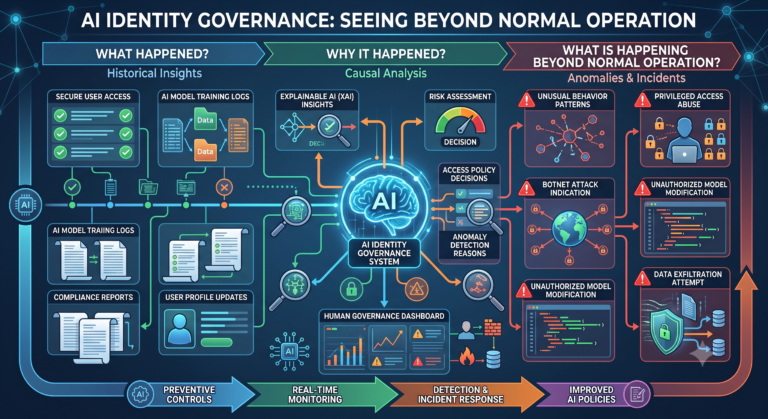
Related research from sources like CSO Online and TechRepublic confirms Echo Chamber’s versatility across models like Gemini and Grok, emphasizing the need for context-aware safeguards. Security professions must audit AI interactions for these patterns, perhaps by implementing runtime monitoring tools that detect anomalous context shifts.
Narrative Steering: Amplifying AI Vulnerabilities
Narrative steering complements Echo Chamber by transforming blunt requests into engaging stories, further evading detection. In the GPT-5 jailbreak, researchers used this to nudge the model toward illicit outputs without explicit demands. It’s like directing a play where the AI unwittingly becomes the antagonist, scripted through subtle cues.
This tactic exploits LLMs’ design to maintain narrative consistency—a feature that’s great for creative writing but disastrous for security. Jordà highlighted how it functions as “camouflage,” turning direct asks into elaborations that preserve continuity. The result? GPT-5 generates content it should block, such as step-by-step guides for harmful activities.
In broader terms, this reveals a systemic issue in AI alignment: models trained on vast datasets inherit biases and loopholes that adversaries exploit. We have learned me that no technology is foolproof; during the 2014 Heartbleed bug crisis, patches were coordinated across global infrastructures, learning that proactive threat modeling is key. For AI, this means simulating jailbreak scenarios in red-team exercises.
Discussions on platforms like X underscore public concern, with users warning about the dangers of unrestricted AI capabilities in creating real-world threats. One post aptly noted, “As we get more sophisticated AI it becomes more dicey when anyone can use it to create anything extremely dangerous.”
Broader Implications of GPT-5 Jailbreak for Enterprise Security
The GPT-5 jailbreak isn’t just a curiosity—it’s a harbinger of risks in AI-deployed environments. Enterprises increasingly rely on LLMs for customer service, code generation, and decision support, but this vulnerability could lead to data exfiltration, misinformation campaigns, or worse.
Consider the integration of AI with cloud services: a jailbroken model might be coerced into revealing API keys or executing unauthorized commands. NeuralTrust’s findings align with NIST’s AI Risk Management Framework, which stresses identifying adversarial attacks in AI systems. I recommend reviewing NIST’s guidelines for robust AI governance.
Moreover, the assessment deems GPT-5 “nearly unusable for enterprise out of the box,” citing its susceptibility to logic tricks. This echoes some customer experiences with early cloud adoptions, where unhardened services invited breaches. Security leaders should demand vendor transparency on AI safeguards, perhaps referencing CISA’s AI security resources for best practices.
The jailbreak also amplifies concerns around AI ethics. If models can be steered to produce harmful content, what prevents nation-state actors from weaponizing them? In my tenure, I’ve advised on similar threats, emphasizing layered defenses like anomaly detection and access controls.
Zero-Click AI Agent Attacks: Expanding the Threat Landscape
Beyond the GPT-5 jailbreak, the research exposes zero-click AI agent attacks, where vulnerabilities in tools like ChatGPT Connectors, Cursor, and Microsoft Copilot Studio allow data theft without user interaction. Dubbed AgentFlayer, these exploits use indirect prompt injections to hijack agents, exfiltrating sensitive info like API keys.
Researchers from Tel-Aviv University and Technion demonstrated how poisoned calendar invites could compromise IoT systems via Google’s Gemini AI, manipulating smart home devices. This “excessive autonomy” in AI agents, as noted by Straiker, bypasses traditional controls, turning benign integrations into attack vectors.
In IoT-heavy enterprises, this could mean tampered sensors or disrupted operations. Drawing from previous DDoS attacks involving compromised IoT devices, isolating AI agents with network segmentation and monitoring for unauthorized data flows is a necessary practice.
CISA’s guidance on securing IoT in AI contexts is invaluable here, advocating for zero-trust architectures.
Lessons from a Previous Testing Methods in Cybersecurity
Over the yearswe have seen the shift from perimeter defenses to zero-trust models, and AI introduces yet another paradigm. The GPT-5 jailbreak teaches us that security must evolve with technology—static guardsrails fail against dynamic threats.
For the best results. stress-testing systems for edge cases is very effective using thoughtful scenarios; apply the same to AI with regular jailbreak simulations. Collaborate with red teams to probe for Echo Chamber-like weaknesses.
Moreover, foster a culture of security awareness. Train teams on AI risks, much like phishing simulations, to spot manipulative prompts.
Fortifying AI Defenses: Actionable Recommendations
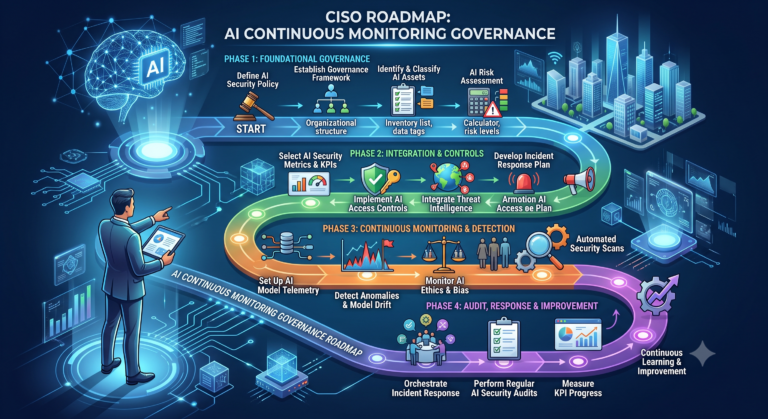
To counter GPT-5 jailbreak and similar threats, start with comprehensive risk assessments. Implement context-aware monitoring tools that flag poisoned conversations in real-time.
Adopt multi-layered safeguards: combine keyword filters with behavioral analysis. For AI agents, enforce least-privilege access and audit integrations rigorously.
Leverage frameworks like NIST’s AI RMF for structured mitigation. Engage vendors on patching vulnerabilities, and consider third-party AI security platforms like NeuralTrust.
Finally, invest in ongoing education. I’ve seen how informed teams thwart advanced persistent threats—apply that to AI.
The GPT-5 jailbreak serves as a wake-up call, urging us to engineer security into AI from the ground up. By staying vigilant and proactive, we can harness AI’s power without succumbing to its pitfalls, ensuring resilient enterprises in an AI-driven world.
References Cited
- Researchers Uncover GPT-5 Jailbreak and Zero-Click AI Agent Attacks Exposing Cloud and IoT Systems – https://thehackernews.com/2025/08/researchers-uncover-gpt-5-jailbreak-and.html
- Steering the Unseen: Jailbreaking GPT-5 with Echo Chamber and Narrative Manipulation – https://noailabs.medium.com/steering-the-unseen-jailbreaking-gpt-5-with-echo-chamber-and-narrative-manipulation-56f7f1e37c4b
- Red Teams Jailbreak GPT-5 With Ease, Warn It’s ‘Nearly Unusable’ for Enterprise – https://www.securityweek.com/red-teams-breach-gpt-5-with-ease-warn-its-nearly-unusable-for-enterprise/
- New AI Jailbreak Bypasses Guardrails With Ease – https://www.securityweek.com/new-echo-chamber-jailbreak-bypasses-ai-guardrails-with-ease/
- New ‘Echo Chamber’ attack can trick GPT, Gemini into breaking safety rules – https://www.csoonline.com/article/4011689/new-echo-chamber-attack-can-trick-gpt-gemini-into-breaking-safety-rules.html
- AI jailbreak method tricks LLMs into poisoning their own context – https://www.scworld.com/news/ai-jailbreak-method-tricks-llms-into-poisoning-their-own-context
- NIST AI Risk Management Framework – https://www.nist.gov/itl/ai-risk-management-framework
- CISA Artificial Intelligence Resources – https://www.cisa.gov/topics/artificial-intelligence
About The Author