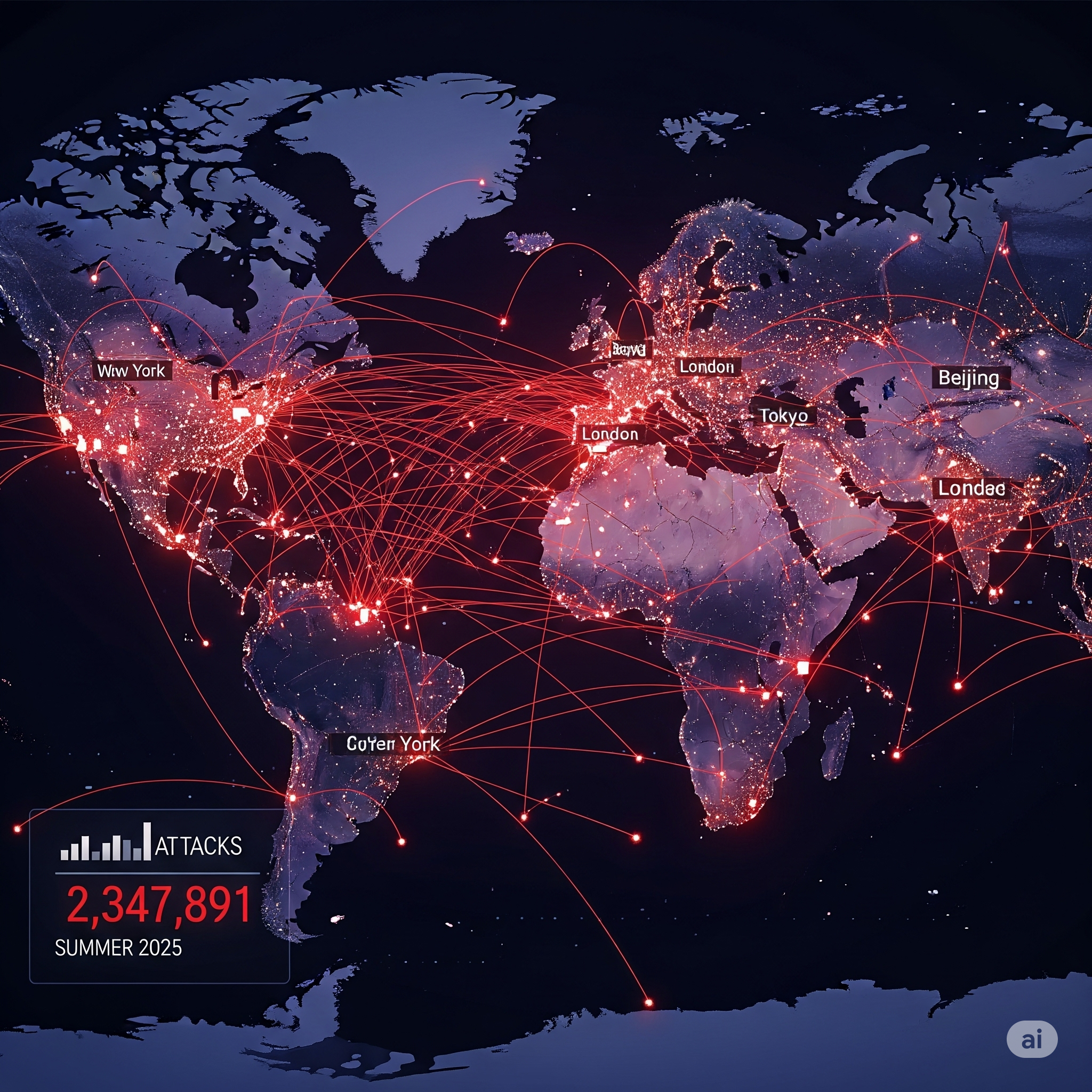
Summer 2025 wasn’t just marked by soaring temperatures; it brought a relentless wave of cyber attacks that exposed vulnerabilities across industries and nations. From retail giants to critical infrastructure, cybercriminals and nation-state actors unleashed sophisticated campaigns, exploiting everything from zero-day vulnerabilities to social engineering tactics. This recap dives into the most significant cyber incidents of the season, their impact, and actionable strategies to bolster cybersecurity defenses. As cyber threats evolve, understanding these attacks is crucial for organizations aiming to stay ahead of the curve.
The Retail Sector Under Siege
Retail organizations faced a barrage of cyber attacks in Summer 2025, with high-profile breaches shaking consumer trust. On July 2, 2025, Louis Vuitton UK suffered a data breach that exposed customer contact information and purchase histories, marking the third breach in three months for LVMH brands, following incidents at Dior and LV Korea. This pattern highlights a growing trend: cybercriminals targeting luxury retail to exploit valuable customer data.
Just days later, on July 10, UK police arrested four suspects linked to attacks on major retailers Marks & Spencer (M&S), Co-op, and Harrods. These incidents were tied to Scattered Spider, a native English-speaking cybercriminal group known for its identity-centric social engineering tactics. Using techniques like voice phishing, MFA fatigue, and typosquatted domains, Scattered Spider breached M&S and Co-op, disrupting online orders, contactless payments, and click-and-collect services. The group extracted 156 GB of sensitive data, including customer names, Social Security numbers, and HR files, which were later posted on DragonForce’s leak site after ransom negotiations failed.
The financial impact was significant. M&S reported potential profit losses of up to £300 million ($402 million USD) due to operational disruptions. Co-op confirmed “significant” data theft, while Harrods restricted internet access to contain a potential breach. These incidents underscore the need for robust cybersecurity measures in retail, where customer data is a prime target.
Scattered Spider’s Evolving Tactics
Scattered Spider, also known as UNC3944, demonstrated adaptability in Summer 2025. Initially targeting UK retailers, the group shifted focus to U.S. insurance firms by mid-June. On June 12, Aflac detected unauthorized access, with potential exposure of customer Social Security numbers and health claims. Scattered Spider’s playbook includes help-desk impersonation and MFA fatigue attacks, exploiting human vulnerabilities to bypass technical defenses. Their collaboration with ransomware groups like DragonForce amplifies the damage, as stolen data fuels extortion campaigns.
Nation-State and Hacktivist Threats Escalate
Not all cyber attacks in Summer 2025 were financially motivated. Nation-state actors and hacktivists leveraged geopolitical tensions to launch disruptive campaigns. Between June 14 and 17, the pro-Israel hacktivist group Predatory Sparrow targeted Iran’s Bank Sepah, disrupting banking services. They followed this with a bold attack on Nobitex, Iran’s largest crypto exchange, destroying approximately $90 million in cryptocurrency by sending tokens to burn wallets. These actions reflect a growing trend of hacktivism as a tool for geopolitical messaging.
On June 30, the U.S. Department of Homeland Security (DHS) and the Cybersecurity and Infrastructure Security Agency (CISA) issued a joint alert warning of potential Iranian retaliation targeting U.S. and European critical infrastructure. This followed U.S. and Israeli strikes on Iranian nuclear and military facilities, escalating cyber risks. The DHS highlighted a “heightened threat environment,” noting that Iranian-backed groups like Br0k3r (aka Pioneer Kitten) sell network access to ransomware affiliates, blending state-sponsored and criminal motives.
ToolShell: A Widespread Espionage Campaign
One of the most alarming developments was the ToolShell campaign, which exploited multiple Microsoft SharePoint vulnerabilities. This cyber espionage operation, active throughout the summer, compromised at least 148 organizations worldwide. Ransomware gangs later joined the fray, using these vulnerabilities to deploy payloads like Interlock’s FileFix. The campaign’s scale and sophistication highlight the dangers of unpatched software in enterprise environments.
Emerging Threats and Vulnerabilities
Summer 2025 saw a spike in zero-day exploits and novel attack vectors. SonicWall warned customers to disable SSLVPN services after ransomware gangs exploited an unknown vulnerability in Gen 7 firewalls. Similarly, Google patched two Qualcomm vulnerabilities (CVE-2025-21479 and CVE-2025-27038) in Android’s August 2025 security update, which were actively exploited in targeted attacks. These incidents emphasize the importance of timely patching and monitoring for emerging threats.
The ClickTok campaign, codenamed FraudOnTok by CTM360, targeted cryptocurrency users with fake TikTok shops. Using AI-generated videos and lookalike domains, attackers tricked users into interacting with malicious platforms, draining crypto wallets. Over 15,000 impersonated TikTok URLs were identified, showcasing the growing role of AI in social engineering scams.
Interlock’s FileFix and Ransomware Evolution
The Interlock ransomware group introduced a new attack vector called FileFix, which pushes malware under the guise of file recovery tools. This tactic, combined with DragonForce’s supply chain attacks via SimpleHelp, illustrates how ransomware groups are diversifying their methods. DragonForce, a ransomware-as-a-service cartel, claimed 136 victims by March 2025, primarily in retail and healthcare. Their ability to exploit legitimate tools like SimpleHelp for reconnaissance and credential harvesting poses a significant challenge for defenders.
Strengthening Cybersecurity Defenses
The surge in cyber attacks during Summer 2025 underscores the need for proactive cybersecurity measures. Organizations can take several steps to mitigate risks and enhance resilience against evolving threats.
Prioritize Patch Management
Unpatched vulnerabilities, like those in Microsoft SharePoint and SonicWall firewalls, were a common entry point for attackers. Implementing a robust patch management program is critical. CISA’s Known Exploited Vulnerabilities Catalog provides a prioritized list of vulnerabilities requiring immediate attention. Organizations should automate patch deployment where possible and maintain an inventory of software assets to ensure timely updates.
Enhance Identity and Access Management
Scattered Spider’s reliance on social engineering highlights the importance of strong identity and access management (IAM). Multi-factor authentication (MFA) should be enforced across all systems, with a focus on modern solutions like biometric-based hardware tokens to counter phishing. Regular employee training on recognizing voice phishing and MFA fatigue attacks is essential.
Simulate Real-World Attacks
Testing defenses against real-world threats is a proven strategy. Platforms like Picus Security Validation allow organizations to simulate attacks like Interlock, Qilin, and ToolShell, identifying gaps in security controls. Regular red-team exercises and penetration testing can further strengthen defenses by mimicking attacker tactics, techniques, and procedures (TTPs).
Monitor and Respond to Threats
Continuous monitoring and threat intelligence are vital for early detection. Solutions like CTM360’s Community Edition can help organizations assess their attack surface and detect digital fraud. Incident response (IR) playbooks should be updated to address modern identity attacks, as traditional on-premises defenses are insufficient against cloud-based threats.
Collaborate with Authorities
The arrests of suspects linked to Scattered Spider demonstrate the value of public-private collaboration. Organizations should engage with agencies like CISA, the FBI, and international partners to share threat intelligence and coordinate responses. CISA’s Thorium platform, released in Summer 2025, offers open-source tools for malware analysis, enhancing collective defense efforts.
The Geopolitical Dimension of Cyber Threats
The Summer 2025 attacks highlight the intersection of cybercrime and geopolitics. Nation-state actors like Iran’s Br0k3r and hacktivist groups like Predatory Sparrow blur the lines between criminal and ideological motives. The DHS warning of Iranian retaliation underscores the need for critical infrastructure operators to prioritize cybersecurity. Sectors like energy, healthcare, and telecommunications must adopt a zero-trust architecture to mitigate risks from state-sponsored threats.
Preparing for Future Conflicts
As cyber conflict becomes an extension of geopolitical tensions, organizations must prepare for targeted campaigns. The U.S. National Cybersecurity Strategy, updated in 2023, emphasizes shifting the burden of security to software vendors and service providers. However, organizations must also take responsibility by investing in resilience, from secure coding practices to regular security audits.
Lessons from Summer 2025
The cyber attacks of Summer 2025 serve as a wake-up call for organizations worldwide. The retail sector’s vulnerabilities exposed the risks of inadequate IAM and patch management, while nation-state and hacktivist campaigns underscored the geopolitical stakes. By prioritizing proactive measures—patching, training, simulation, and collaboration—organizations can reduce their attack surface and respond effectively to threats.
The evolving tactics of groups like Scattered Spider and DragonForce show that cybercriminals are becoming more sophisticated, leveraging AI and legitimate tools to bypass defenses. Meanwhile, zero-day exploits and unpatched vulnerabilities remain a persistent challenge. As the threat landscape grows more complex, staying informed and agile is non-negotiable.
Cybersecurity is no longer just an IT issue; it’s a business imperative. The lessons of Summer 2025 highlight the importance of resilience, adaptability, and collaboration in the face of relentless cyber threats. By taking decisive action now, organizations can protect their assets, customers, and reputation from the next wave of attacks.
References Cited
- BleepingComputer: The Heat Wasn’t Just Outside: Cyber Attacks Spiked in Summer 2025
- CISA: Known Exploited Vulnerabilities Catalog
- DHS: National Terrorism Advisory System Bulletin
- CTM360: FraudOnTok Campaign Analysis
- Picus Security: Validation Platform Overview
About The Author