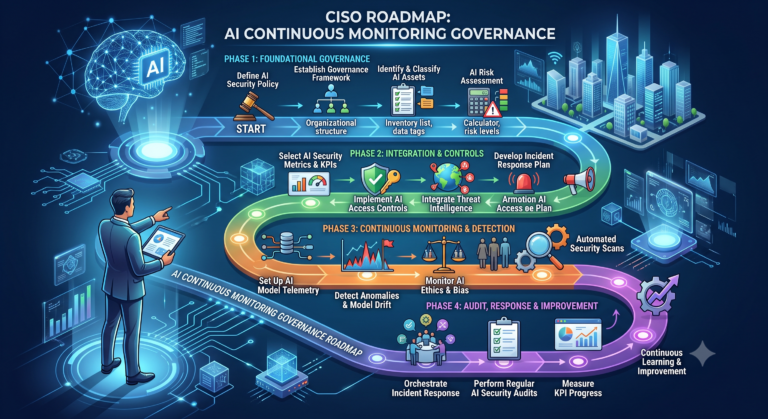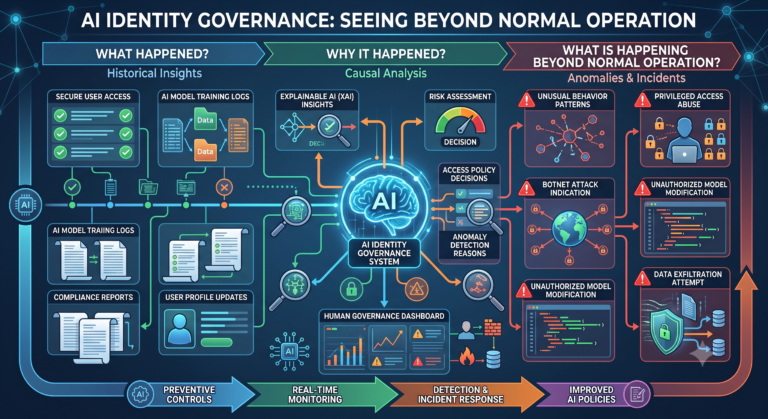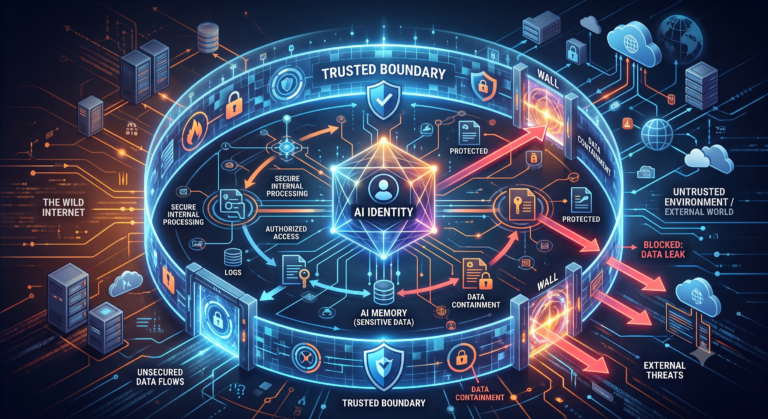

Cyber threats are evolving rapidly, and traditional security measures alone are no longer sufficient to defend against sophisticated attacks. Organizations must adopt automation and artificial intelligence (AI) to enhance threat detection, accelerate response times, and reduce human error. AI-driven cybersecurity solutions enable organizations to proactively mitigate risks, identify anomalies, and adapt defenses in real time.
1. Enhance Threat Detection with AI-Driven Analytics
Traditional security monitoring relies on predefined rules and signature-based detection, which can fail against new and unknown threats. AI-powered analytics use machine learning to identify behavioral anomalies and detect potential threats before they escalate. According to a report by MIT Sloan, organizations using AI-driven security analytics detect threats 60% faster than those relying on manual processes[1].
Key Actions:
- Implement AI-Powered SIEM Solutions: Security Information and Event Management (SIEM) platforms with AI capabilities analyze vast amounts of security data to detect patterns and anomalies.
- Use Behavioral Analytics: AI models learn normal user and network behavior, flagging deviations that may indicate insider threats or advanced persistent threats (APTs).
- Integrate Threat Intelligence Feeds: AI-driven tools analyze global threat intelligence data to predict and prevent potential attacks.

2. Automate Incident Response to Reduce Downtime
Manual incident response is slow and resource-intensive, allowing cyber threats to spread before mitigation efforts take effect. Automating response processes with AI-driven Security Orchestration, Automation, and Response (SOAR) solutions significantly improves response times. Research from Gartner shows that organizations leveraging automation in incident response reduce containment time by 74%[2].
Key Actions:
- Deploy Automated Threat Containment: AI-based systems can isolate infected devices, block malicious traffic, and enforce security policies in real time.
- Use AI for Forensic Analysis: Machine learning algorithms analyze attack patterns and recommend remediation steps.
- Integrate AI with Endpoint Detection and Response (EDR): AI-enhanced EDR platforms detect suspicious activity and take automated actions, such as quarantining compromised endpoints.
3. Improve Phishing Detection and Prevention
Phishing remains one of the most common attack vectors, with increasingly sophisticated tactics making it harder for traditional security filters to detect fraudulent emails. AI-powered phishing detection solutions analyze email metadata, linguistic patterns, and sender behavior to identify malicious messages more accurately. A study by the Ponemon Institute found that AI-driven phishing detection reduces false positives by 90% while increasing overall detection accuracy[3].
Key Actions:
- Implement AI-Powered Email Security: AI tools scan incoming emails for phishing indicators, including domain spoofing and malicious attachments.
- Use Natural Language Processing (NLP): AI-driven NLP models detect social engineering tactics used in phishing emails.
- Automate User Training with AI: AI can personalize security awareness training based on employees’ risk profiles and past interactions with phishing simulations.
4. Strengthen Identity and Access Management (IAM) with AI
Traditional IAM systems rely on static rules, making them ineffective against credential-based attacks. AI enhances IAM by continuously assessing user behavior and adapting authentication requirements based on risk levels. According to Forrester, AI-powered IAM reduces unauthorized access incidents by 40% while improving user experience through frictionless authentication[4].
Key Actions:
- Adopt AI-Driven Adaptive Authentication: AI assesses contextual factors—such as login location, device type, and behavior—to apply risk-based authentication.
- Monitor Privileged Access with AI: AI models detect unusual privileged account activities, such as unauthorized access attempts.
- Automate Identity Lifecycle Management: AI automates user provisioning and de-provisioning, reducing the risk of orphaned accounts and insider threats.
5. Use AI for Continuous Compliance and Risk Management
Compliance with security regulations requires constant monitoring and auditing, which can be challenging for organizations with large IT infrastructures. AI simplifies compliance by automating risk assessments, policy enforcement, and audit reporting. A study by Deloitte found that organizations using AI for compliance monitoring reduce audit preparation time by 50%[5].
Key Actions:
- Automate Security Audits: AI-driven tools continuously assess compliance with frameworks like GDPR, HIPAA, and NIST.
- Use AI for Risk Scoring: AI models evaluate security posture based on real-time threat intelligence and system vulnerabilities.
- Implement AI-Powered Policy Enforcement: AI ensures that security policies are consistently applied across cloud, on-premises, and hybrid environments.
By leveraging automation and AI, organizations can significantly enhance their cybersecurity posture, improve response times, and reduce operational burdens. AI-driven security solutions enable proactive defense, allowing security teams to focus on strategic initiatives rather than manual threat management.
For more information on this topic, refer to the article How CISOs Can Build a Cybersecurity-First Culture.
References Cited:
- MIT Sloan – AI in Cybersecurity: https://mitsloan.mit.edu/
- Gartner – Automating Incident Response: https://www.gartner.com/en/insights/cybersecurity
- Ponemon Institute – AI in Phishing Detection: https://www.ibm.com/reports/data-breach
- Forrester – AI-Powered Identity and Access Management: https://www.forrester.com/research/the-forrester-wave/
- Deloitte – AI and Compliance Monitoring: https://www2.deloitte.com/global/en/insights/industry/technology.html
About The Author