Skip to content
The FedNinjas

The Fedninjas

FedNinjas: Your Guide to Federal Cloud, Cybersecurity, and FedRAMP Success.

Primary Menu
  • Home
  • Blog
  • Podcast
Listen to us on Spotify!

The IoT Revolution – A Double-Edged Sword: Part 1

Eric Adams March 10, 2025 3 minutes read
Internet of Things IoT

Internet of Things IoT

The Explosion of IoT and Its Impact on Industries

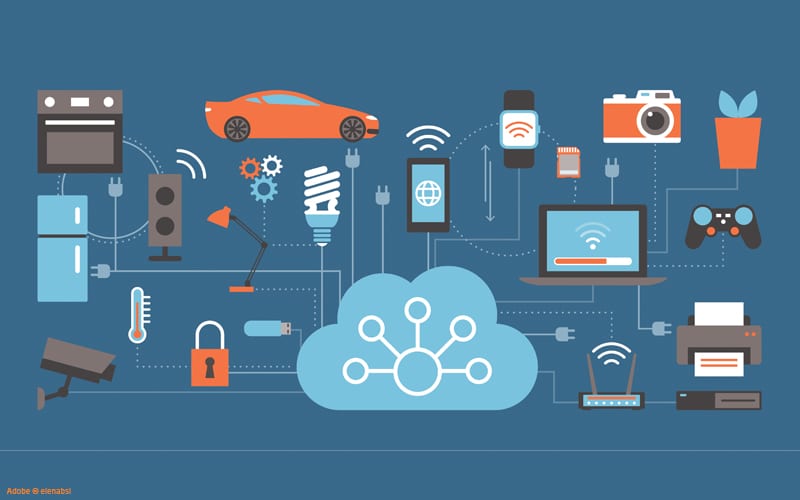
The world is being rewritten in code, and at the heart of this digital renaissance is the Internet of Things (IoT). Billions of devices—sensors, cameras, wearables, industrial machines—are now interconnected, creating an ecosystem that promises efficiency, automation, and intelligence at a scale never before imagined. By 2030, experts predict there will be over 29 billion IoT devices globally (Statista, 2023).

From smart cities that optimize energy use to healthcare systems that monitor patient vitals in real time, IoT is revolutionizing every industry. In manufacturing, predictive maintenance saves billions by preventing unplanned downtime. In agriculture, connected sensors optimize water usage and increase crop yields. Retailers harness IoT-driven analytics to create personalized customer experiences. But with all this innovation comes a fundamental problem—security.

Security Vulnerabilities Baked into IoT’s DNA

Here’s the harsh reality: IoT was built for connectivity, not security. These devices are often designed with cost and convenience as the primary considerations, leaving security as an afterthought. Weak default passwords, unpatched firmware, and unsecured communication protocols make them low-hanging fruit for cybercriminals.

Consider the Mirai botnet attack of 2016, where unsecured IoT devices were hijacked to launch one of the largest DDoS attacks in history (Antonakakis et al., 2017). That was just the beginning. Today, threat actors exploit IoT weaknesses to infiltrate corporate networks, compromise critical infrastructure, and steal sensitive data.

Why the Current Security Model is Broken

The cybersecurity industry has been playing catch-up, applying outdated IT security principles to an IoT world that operates under entirely different rules. Traditional perimeter-based security—firewalls, VPNs, endpoint protection—fails in an environment where devices are mobile, diverse, and often unpatchable.

Most IoT devices have a lifecycle spanning decades, but security updates, if they exist, are often neglected. Worse, many enterprises don’t even have visibility into all their IoT assets, making it impossible to secure what they can’t see. This fragmented security approach has led to an exponential rise in IoT breaches, with attacks targeting IoT devices increasing by 400% in the last two years alone (IoT World, 2023).

The Need for a New Security Paradigm

The old ways won’t cut it. We need a radical rethink—a security paradigm designed from the ground up for IoT’s unique challenges. The answer lies in:

  • Zero Trust Architecture (ZTA): Assume every device is compromised until proven otherwise. Continuous authentication and least-privilege access must become the standard.
  • AI-driven Threat Detection: Automation is key. AI-powered anomaly detection can help identify malicious activities in real time.
  • End-to-End Encryption: Every data transmission must be secured. No more plain-text communications.
  • Device Identity and Trust Management: Strong authentication mechanisms, such as hardware-based roots of trust, are essential.
  • Regulatory and Industry Standards: Governments and enterprises must enforce stricter security requirements on IoT manufacturers.

The IoT revolution isn’t slowing down, but neither are the threats. The choice is clear: either we reimagine security from first principles or we let the vulnerabilities of IoT become our downfall.

In Part 2, we’ll dive into an even greater cybersecurity threat—the convergence of IT and Operational Technology (OT). It’s a disaster waiting to happen, and unless we act now, the consequences could be catastrophic.


References

  • Antonakakis, M., et al. (2017). “Understanding the Mirai Botnet.” Proceedings of USENIX Security Symposium.
  • Statista. (2023). “Number of IoT Connected Devices Worldwide 2010-2030.”
  • IoT World Today. (2023). “IoT Malware Attacks Jump 400% .”

About The Author

Eric Adams

See author's posts

Post navigation

Previous: Non-Human Interactive (NHI) Identity and Access Management: Securing Machine Identities in Cybersecurity
Next: The Evolving Cyber Threats in Cryptocurrency: Hacks, Scams, and Security Strategies

Related Stories

IOT Security

The IoT Revolution – A Double-Edged Sword: Part 3

Eric Adams March 13, 2025
qtq80-TR5RkU

The IoT Revolution – A Double-Edged Sword: Part 2

Eric Adams March 11, 2025
NHI login

Non-Human Interactive (NHI) Identity and Access Management: Securing Machine Identities in Cybersecurity

Eric Adams March 7, 2025

Trending News

Claude Mythos and Project Glasswing: a Seismic Shift in Cybersecurity Claude Mythos and Glasswing Butterfly 1

Claude Mythos and Project Glasswing: a Seismic Shift in Cybersecurity

April 21, 2026 0
The Stryker Cyber Attack: A Mass Remote Wipe of its Managed Devices Stryker affected countries 2

The Stryker Cyber Attack: A Mass Remote Wipe of its Managed Devices

March 19, 2026
Agentic AI is the Attack Surface Agentic AI attack surfaces 3

Agentic AI is the Attack Surface

February 3, 2026
The Rise of Humanoid Robots in Modern Society Humanoid robots getting hackied 4

The Rise of Humanoid Robots in Modern Society

December 29, 2025
The Rise of AI Espionage: How Autonomous Agents Are Redefining Cyber Threats AI-orchestrated-cyber-espionage-campaign 5

The Rise of AI Espionage: How Autonomous Agents Are Redefining Cyber Threats

November 17, 2025
  • 3PAO assessments
  • Access Control
  • Advanced Threat Protection
  • Adversarial Modeling
  • Agentic AI
  • AI
  • AI and Quantum Computing
  • AI in Healthcare
  • AI-Powered SOCs
  • AI-Powered Tools
  • Anomaly Detection
  • API Security
  • Application Security
  • Artificial Intelligence
  • Artificial Intelligence
  • Artificial Intelligence in Cybersecurity
  • Attack Surface Management
  • Attack Surface Reduction
  • Audit and Compliance
  • Autonomous Systems
  • Blockchain
  • Breach Severity
  • Business
  • Career
  • CISA Advisory
  • CISO
  • CISO Strategies
  • Cloud
  • Cloud Computing
  • Cloud Security
  • Cloud Security
  • Cloud Service Providers
  • Compliance
  • Compliance And Governance
  • Compliance and Regulatory Affairs
  • Compliance And Regulatory Requirements
  • Continuous Monitoring
  • Continuous Monitoring
  • Corporate Security
  • Critical Infrastructure
  • Cross-Agency Collaboration
  • Cryptocurrency
  • Cyber Attack
  • Cyber Attacks
  • Cyber Deterrence
  • Cyber Resilience
  • Cyber Threats
  • Cyber-Physical Systems
  • Cyberattacks.
  • Cybercrime
  • Cybersecurity
  • Cybersecurity And Sustainability
  • Cybersecurity Breaches
  • Cybersecurity in Federal Programs
  • Cybersecurity Measures
  • Cybersecurity Strategy
  • Cybersecurity Threats
  • Data Breach
  • Data Breaches
  • Data Privacy
  • Data Protection
  • Data Security
  • Deepfake Detection
  • Deepfakes
  • Defense Readiness
  • Defense Strategies
  • Digital Twins
  • Disaster Recovery
  • Dwell Time
  • Encryption
  • Encryption Technologies
  • Federal Agencies
  • Federal Cloud
  • Federal Cybersecurity
  • Federal Cybersecurity Regulations
  • Federal Government
  • FedRamp
  • FedRAMP Compliance
  • Game Theory
  • GDPR
  • Global Security Strategies
  • Government
  • Government Compliance.
  • Government Cybersecurity
  • Healthcare
  • Healthcare Cybersecurity
  • Healthcare Technology
  • HIPAA Compliance
  • humanoid
  • Humans
  • Incident Response
  • Industrial Control Systems (ICS)
  • Information Security
  • Insider Threats
  • Internet of Things
  • Intrusion Detection
  • IoT
  • IoT Security
  • IT Governance
  • IT Security
  • Least Privilege
  • LLM Poisoning
  • Modern Cyber Defense
  • Nation-State Hackers
  • National Cybersecurity Strategy
  • National Security
  • Network Security
  • NHI
  • NIST Cybersecurity Framework
  • Operational Environments
  • Phishing
  • Privacy
  • Public Safety
  • Quantum Computing
  • Ransomware
  • Real-World Readiness
  • Red Teaming
  • Regulatory Compliance
  • Risk Assessment
  • Risk Management
  • Risk Management
  • Risk-Based Decision Making
  • robotics
  • Secure Coding Practices
  • Security Awareness
  • Security Operations Center
  • Security Operations Center (SOC)
  • Security Threats
  • Security Training
  • SIEM Tools
  • Social Engineering
  • Supply Chain Cybersecurity
  • Supply Chain Risk Management
  • Supply Chain Security
  • Sustainability
  • Tech
  • Technology
  • Third Party Security
  • Third-Party Risk Management
  • Third-Party Vendor Management
  • Threat Analysis
  • Threat Containment
  • Threat Defense
  • Threat Detection
  • Threat Intelligence
  • Threat Landscape
  • Training
  • Uncategorized
  • vCISO
  • Voice Phishing
  • Vulnerability Disclosure
  • Vulnerability Management
  • Workforce
  • Zero Trust Architecture
  • Zero Trust Authentication
  • Zero-Day Exploits
  • Zero-Day Vulnerabilities
  • Zero-Trust Architecture

You may have missed

Claude Mythos and Glasswing Butterfly

Claude Mythos and Project Glasswing: a Seismic Shift in Cybersecurity

Eric Adams April 21, 2026 0
Stryker affected countries

The Stryker Cyber Attack: A Mass Remote Wipe of its Managed Devices

Eric Adams March 19, 2026
Agentic AI attack surfaces

Agentic AI is the Attack Surface

Eric Adams February 3, 2026
Humanoid robots getting hackied

The Rise of Humanoid Robots in Modern Society

Eric Adams December 29, 2025
Copyright © All rights reserved.