
Skip to content
The FedNinjas

The Fedninjas

FedNinjas: Your Guide to Federal Cloud, Cybersecurity, and FedRAMP Success.

Primary Menu
  • Home
  • Blog
  • Podcast
Listen to us on Spotify!

Can AI Bridge the Cybersecurity Skills Gap?

FedNinjas Team March 24, 2025 5 minutes read
ai-cybersecurity4

The cybersecurity field is stretched thin. Attacks are increasing in speed, scale, and complexity, yet organizations everywhere are struggling to fill cybersecurity roles. With a shortage of over 3 million professionals worldwide, it’s clear we’re facing a workforce crisis. Enter artificial intelligence. AI is transforming security operations—but can it truly help close the gap, or is this just another layer of hype? This article explores how AI and the cybersecurity skills gap intersect—and whether technology can be a real solution to one of the industry’s most urgent problems.

Table of Contents

  • The scope of the cybersecurity workforce crisis
  • How AI is transforming cybersecurity workflows
  • Why AI alone can’t replace human expertise
  • The path forward: AI-enhanced cybersecurity teams
  • Conclusion: Rethinking the skills gap in the AI era

The scope of the cybersecurity workforce crisis

The cybersecurity industry is facing an existential challenge. According to (ISC)²’s 2023 Workforce Study, there’s a global shortage of 3.4 million skilled professionals. That’s not a gap—it’s a canyon.

Cyber threats are evolving faster than most teams can respond. Cybercriminals move quickly, using automation and AI to exploit vulnerabilities at massive scale. Meanwhile, security roles remain difficult to fill. They often require high levels of technical expertise, certifications, and years of hands-on experience.

The situation is worsened by analyst burnout, job dissatisfaction, and a lack of diversity in the field. These factors compound the difficulty of building resilient, skilled cybersecurity teams. That’s where many are turning to technology for help—specifically, AI.

How AI is transforming cybersecurity workflows

Artificial intelligence is already playing a critical role in reducing manual workloads and accelerating threat detection. AI-enhanced security tools analyze large datasets, flag anomalies, and respond to incidents in real time.

Platforms powered by AI and machine learning support:

  • Log and network traffic analysis
  • Threat hunting at scale
  • Patch prioritization and vulnerability assessment
  • Automation of repetitive tasks through SOAR (Security Orchestration, Automation, and Response)

This technology enables cybersecurity professionals to focus on higher-level strategy while AI handles the noise. It’s not hard to see how this shift could help reduce the strain caused by the cybersecurity talent gap.

In other words, AI and the cybersecurity skills gap aren’t just parallel topics—they’re increasingly linked in practical, operational ways.

Notably, companies like Microsoft and ReliaQuest have begun embedding agentic AI into their platforms to triage notifications and prioritize tasks automatically [1].

Why AI alone can’t replace human expertise

Despite the benefits, AI is far from a complete solution. It’s a powerful tool, not a human substitute.

AI lacks context, ethics, and creativity. It can flag potential threats, but it can’t reason through gray areas or make mission-critical decisions under pressure. It relies on data quality—and when that data is flawed, AI outcomes can be dangerously wrong.

More concerning, AI systems are becoming targets themselves. Adversarial machine learning, model poisoning, and algorithm manipulation are real threats. Cybercriminals are already crafting attacks designed to exploit weaknesses in AI security systems.

This means cybersecurity professionals need to upskill—not just in traditional areas like threat modeling and incident response, but also in how AI functions, where it can fail, and how to secure it. AI and the cybersecurity skills gap are entangled—and solving one requires addressing both.

The path forward: AI-enhanced cybersecurity teams

The future isn’t about humans versus AI—it’s about working together.

Organizations should think of AI as a force multiplier. When used properly, it enhances team productivity, shortens training curves, and strengthens defenses. AI-powered training environments, like virtual cyber ranges, allow for real-time scenario learning, helping new professionals gain experience faster and with more depth.

These tools also make cybersecurity more accessible. Interactive simulations and AI-driven courses can help overcome barriers to entry, democratizing access to the field.

Even governing bodies are responding. The European Commission recently announced a major investment of over €1 billion into AI, cybersecurity, and digital skills to address exactly this gap [2].

Solving the cybersecurity skills gap won’t come from technology alone, but integrating AI into education, workflows, and strategy is an essential part of the solution.

Conclusion: Rethinking the skills gap in the AI era

AI is changing the game for security teams—but not by replacing them. The combination of skilled human defenders and intelligent automation is where the real potential lies.

Addressing the cybersecurity skills gap requires a multi-faceted approach: better training, more inclusive hiring, and smart adoption of AI tools that empower people, not replace them.

The good news? AI is already making a difference. The better news? We still need humans at the heart of cybersecurity.


References Cited:

  1. (ISC)². “2023 Cybersecurity Workforce Study.” https://www.isc2.org/research
  2. Axios. “How ‘Agentic AI’ Is Quietly Reinventing Cybersecurity.” https://www.axios.com/2025/03/27/agentic-ai-cybersecurity-microsoft-crowdstrike
  3. Reuters. “EU to invest €1.4 billion in artificial intelligence, cybersecurity and digital skills.” https://www.reuters.com/technology/artificial-intelligence/eu-invest-14-billion-artificial-intelligence-cybersecurity-digital-skills-2025-03-28

About The Author

FedNinjas Team

See author's posts

Post navigation

Previous: FedRAMP in 2025 – the Next Evolution of Federal Cloud Risk Management Automation
Next: How AI is Transforming Cyber Risk Management and Compliance

Related Stories

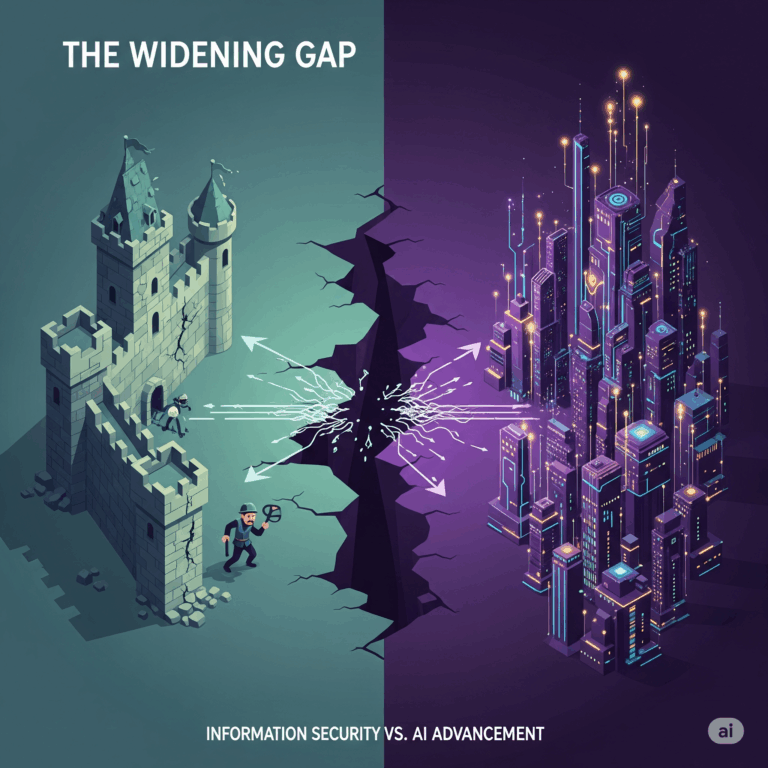
Widening gap between information security and AI

The Widening Gap Between Information Security and AI

Eric Adams August 22, 2025
Cyber defense during war

Safeguarding Critical Infrastructure in Wartime Cyber Battles

Eric Adams June 19, 2025
Cybersecurity future

The Future of Cybersecurity: Trends Shaping Tomorrow

Eric Adams June 12, 2025

Trending News

Claude Mythos and Project Glasswing: a Seismic Shift in Cybersecurity Claude Mythos and Glasswing Butterfly 1

Claude Mythos and Project Glasswing: a Seismic Shift in Cybersecurity

April 21, 2026 0
The Stryker Cyber Attack: A Mass Remote Wipe of its Managed Devices Stryker affected countries 2

The Stryker Cyber Attack: A Mass Remote Wipe of its Managed Devices

March 19, 2026
Agentic AI is the Attack Surface Agentic AI attack surfaces 3

Agentic AI is the Attack Surface

February 3, 2026
The Rise of Humanoid Robots in Modern Society Humanoid robots getting hackied 4

The Rise of Humanoid Robots in Modern Society

December 29, 2025
The Rise of AI Espionage: How Autonomous Agents Are Redefining Cyber Threats AI-orchestrated-cyber-espionage-campaign 5

The Rise of AI Espionage: How Autonomous Agents Are Redefining Cyber Threats

November 17, 2025
  • 3PAO assessments
  • Access Control
  • Advanced Threat Protection
  • Adversarial Modeling
  • Agentic AI
  • AI
  • AI and Quantum Computing
  • AI in Healthcare
  • AI-Powered SOCs
  • AI-Powered Tools
  • Anomaly Detection
  • API Security
  • Application Security
  • Artificial Intelligence
  • Artificial Intelligence
  • Artificial Intelligence in Cybersecurity
  • Attack Surface Management
  • Attack Surface Reduction
  • Audit and Compliance
  • Autonomous Systems
  • Blockchain
  • Breach Severity
  • Business
  • Career
  • CISA Advisory
  • CISO
  • CISO Strategies
  • Cloud
  • Cloud Computing
  • Cloud Security
  • Cloud Security
  • Cloud Service Providers
  • Compliance
  • Compliance And Governance
  • Compliance and Regulatory Affairs
  • Compliance And Regulatory Requirements
  • Continuous Monitoring
  • Continuous Monitoring
  • Corporate Security
  • Critical Infrastructure
  • Cross-Agency Collaboration
  • Cryptocurrency
  • Cyber Attack
  • Cyber Attacks
  • Cyber Deterrence
  • Cyber Resilience
  • Cyber Threats
  • Cyber-Physical Systems
  • Cyberattacks.
  • Cybercrime
  • Cybersecurity
  • Cybersecurity And Sustainability
  • Cybersecurity Breaches
  • Cybersecurity in Federal Programs
  • Cybersecurity Measures
  • Cybersecurity Strategy
  • Cybersecurity Threats
  • Data Breach
  • Data Breaches
  • Data Privacy
  • Data Protection
  • Data Security
  • Deepfake Detection
  • Deepfakes
  • Defense Readiness
  • Defense Strategies
  • Digital Twins
  • Disaster Recovery
  • Dwell Time
  • Encryption
  • Encryption Technologies
  • Federal Agencies
  • Federal Cloud
  • Federal Cybersecurity
  • Federal Cybersecurity Regulations
  • Federal Government
  • FedRamp
  • FedRAMP Compliance
  • Game Theory
  • GDPR
  • Global Security Strategies
  • Government
  • Government Compliance.
  • Government Cybersecurity
  • Healthcare
  • Healthcare Cybersecurity
  • Healthcare Technology
  • HIPAA Compliance
  • humanoid
  • Humans
  • Incident Response
  • Industrial Control Systems (ICS)
  • Information Security
  • Insider Threats
  • Internet of Things
  • Intrusion Detection
  • IoT
  • IoT Security
  • IT Governance
  • IT Security
  • Least Privilege
  • LLM Poisoning
  • Modern Cyber Defense
  • Nation-State Hackers
  • National Cybersecurity Strategy
  • National Security
  • Network Security
  • NHI
  • NIST Cybersecurity Framework
  • Operational Environments
  • Phishing
  • Privacy
  • Public Safety
  • Quantum Computing
  • Ransomware
  • Real-World Readiness
  • Red Teaming
  • Regulatory Compliance
  • Risk Assessment
  • Risk Management
  • Risk Management
  • Risk-Based Decision Making
  • robotics
  • Secure Coding Practices
  • Security Awareness
  • Security Operations Center
  • Security Operations Center (SOC)
  • Security Threats
  • Security Training
  • SIEM Tools
  • Social Engineering
  • Supply Chain Cybersecurity
  • Supply Chain Risk Management
  • Supply Chain Security
  • Sustainability
  • Tech
  • Technology
  • Third Party Security
  • Third-Party Risk Management
  • Third-Party Vendor Management
  • Threat Analysis
  • Threat Containment
  • Threat Defense
  • Threat Detection
  • Threat Intelligence
  • Threat Landscape
  • Training
  • Uncategorized
  • vCISO
  • Voice Phishing
  • Vulnerability Disclosure
  • Vulnerability Management
  • Workforce
  • Zero Trust Architecture
  • Zero Trust Authentication
  • Zero-Day Exploits
  • Zero-Day Vulnerabilities
  • Zero-Trust Architecture

You may have missed

Claude Mythos and Glasswing Butterfly

Claude Mythos and Project Glasswing: a Seismic Shift in Cybersecurity

Eric Adams April 21, 2026 0
Stryker affected countries

The Stryker Cyber Attack: A Mass Remote Wipe of its Managed Devices

Eric Adams March 19, 2026
Agentic AI attack surfaces

Agentic AI is the Attack Surface

Eric Adams February 3, 2026
Humanoid robots getting hackied

The Rise of Humanoid Robots in Modern Society

Eric Adams December 29, 2025
Copyright © All rights reserved.