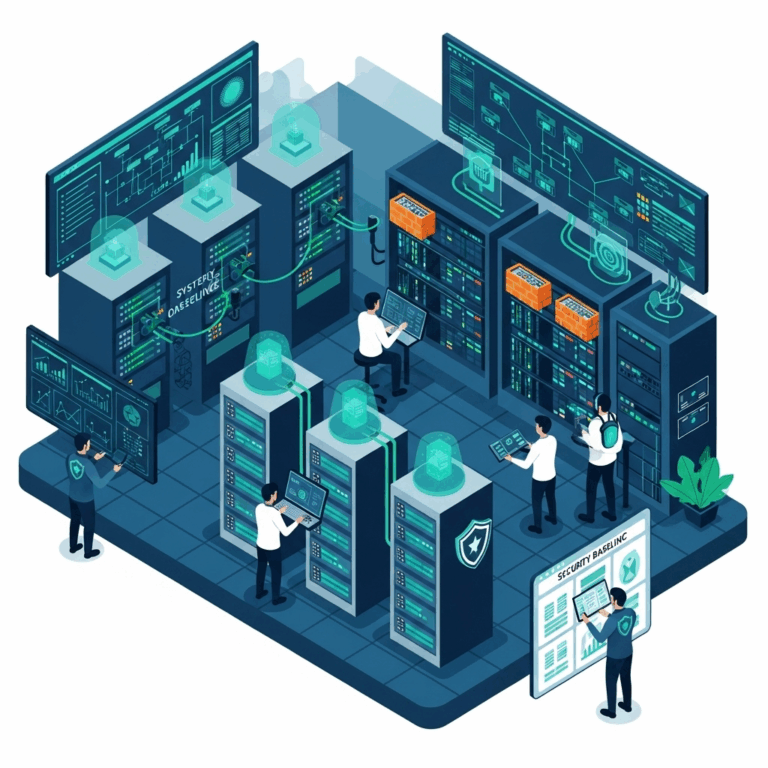

Artificial intelligence (AI) is transforming the operational backbone of modern civilization—our critical infrastructure. From energy grids to water systems, transportation networks to emergency response, AI enables real-time analytics, predictive maintenance, and autonomous decision-making at scale. However, these benefits come with unique risks. If AI systems in critical infrastructure fail, the result can be economic disruption, physical harm, or national security vulnerabilities.
This article explores how to responsibly integrate AI into critical infrastructure, with safeguards for safety, resilience, and human control.
Why AI in Critical Infrastructure Demands Special Oversight
Critical infrastructure systems are high-consequence environments. Mistakes aren’t measured in errors—they’re measured in blackouts, grid failures, contaminated water, or delayed emergency response. Key challenges when implementing AI in these environments include:
- System interdependence: A failure in one AI subsystem may cascade across others
- Operational complexity: Legacy systems must coexist with AI
- Cyber-physical risk: AI decisions can directly trigger real-world actions
According to CISA, the threat landscape for operational technology (OT) systems—including those running AI—is expanding rapidly¹. Therefore, AI integration must align with both security frameworks and resilience strategies.
Sectors Most Affected by AI-Driven Infrastructure
Energy and Power
AI helps:
- Predict load demands
- Detect anomalies in grid behavior
- Automate fault isolation in smart grids
But flawed AI models can cause overcorrection or blackouts, especially if they respond too aggressively to sensor input or cyber-manipulated data².
Transportation
AI supports:
- Traffic light optimization
- Rail network scheduling
- Autonomous public transit vehicles
However, incidents like over-reliance on driver-assist systems have revealed what happens when human operators disengage³.
Water and Waste Systems
AI can:
- Predict demand surges
- Monitor chemical composition
- Automate pump scheduling
Yet unmonitored automation may miss contamination events, causing public health risks⁴.
Emergency and Public Safety
AI enables:
- Predictive deployment of first responders
- Drone-based disaster assessments
- Fire modeling for evacuation planning
But misuse can lead to biased response allocation or failure to escalate emergencies.
Design Strategies for Responsible AI in Infrastructure
Resilient-by-Design Architecture
To prevent cascading failures, systems should be built for resilience:
- Modular AI components that can be isolated during faults
- Redundant fallback controls for manual operation
- Edge computing to ensure continuity during cloud or network outages
This design approach mirrors the “fail safe” principle long used in industrial engineering⁵.
Multi-Layer Monitoring
Combine traditional OT monitoring with AI-specific oversight:
- Drift detection to identify model degradation
- Adversarial defense systems to detect cyber inputs meant to confuse AI
- Human-in-the-loop validation for abnormal conditions
Layers of supervision reduce dependency on any single point of failure.
Integration With Human Operations
AI must enhance, not replace, human decision-making. Embed:
- Operator alerting systems for edge-case conditions
- Real-time dashboards showing AI behavior and risk levels
- Simulation modes where operators can test scenarios without triggering real actions
This approach supports both safety and operator trust.
Governance and Compliance in AI for Infrastructure
Regulatory Alignment
Organizations must align with both AI ethics guidelines and critical infrastructure regulations. Relevant frameworks include:
- NIST AI RMF
- NERC-CIP for electrical grid security
- EPA guidelines for water systems
- FAA/U.S. DOT AI guidance for transportation autonomy⁶
Governance plans should integrate these standards into deployment and audit cycles.
Public-Private Coordination
Much of U.S. infrastructure is owned by private firms but regulated publicly. AI deployments must:
- Be transparent to government partners
- Support information sharing across sectors
- Comply with sector risk management agencies (SRMAs) and Information Sharing and Analysis Centers (ISACs)
Coordinated AI rollouts help avoid fragmented risk management.
Emergency Fallback and Override Protocols
Every AI system in infrastructure should support:
- Emergency stop buttons
- Escalation trees to senior human operators
- Pre-scripted crisis response modes that switch to known-safe operations
Regulations should require these capabilities for AI use in safety-critical functions.
AI-Specific Risks in Critical Systems
Data Poisoning and Model Manipulation
Attackers can poison sensor inputs or inject adversarial data that misleads AI models. This has been tested in energy, water, and military simulations⁷. AI systems must:
- Verify data authenticity
- Monitor for abnormal behavior
- Be retrainable with clean data when compromise occurs
Automation Bias and Human Over-Reliance
Operators may begin to over-trust AI recommendations. This reduces vigilance, especially in environments like air traffic control or water purification.
Mitigation requires training, transparency, and performance reviews where human and AI decisions are compared⁸.
Ethical and Equity Concerns
AI must not worsen disparities. Examples of risk:
- Uneven disaster response due to biased data
- Under-served communities receiving slower service based on flawed predictive models
Equity audits should be mandatory before deployment.
What’s Next in This Series?
The final article in this Responsible AI Implementation series will recap the core principles, summarize best practices, and provide a practical launch plan for responsible AI programs:
Stay tuned for actionable checklists, readiness milestones, and executive guidance.
References Cited:
1 CISA: Securing Industrial Control Systems
2 DOE: AI and the Modern Grid
3 NTSB: Automation and Human Factors
4 EPA: Advanced Monitoring in Water Systems
5 IEEE: Resilient AI in Infrastructure
6 DOT: Automated Systems Safety Guidance
7 MITRE: Adversarial Machine Learning in Infrastructure
8 Brookings: Preventing Over-Reliance on AI
About The Author