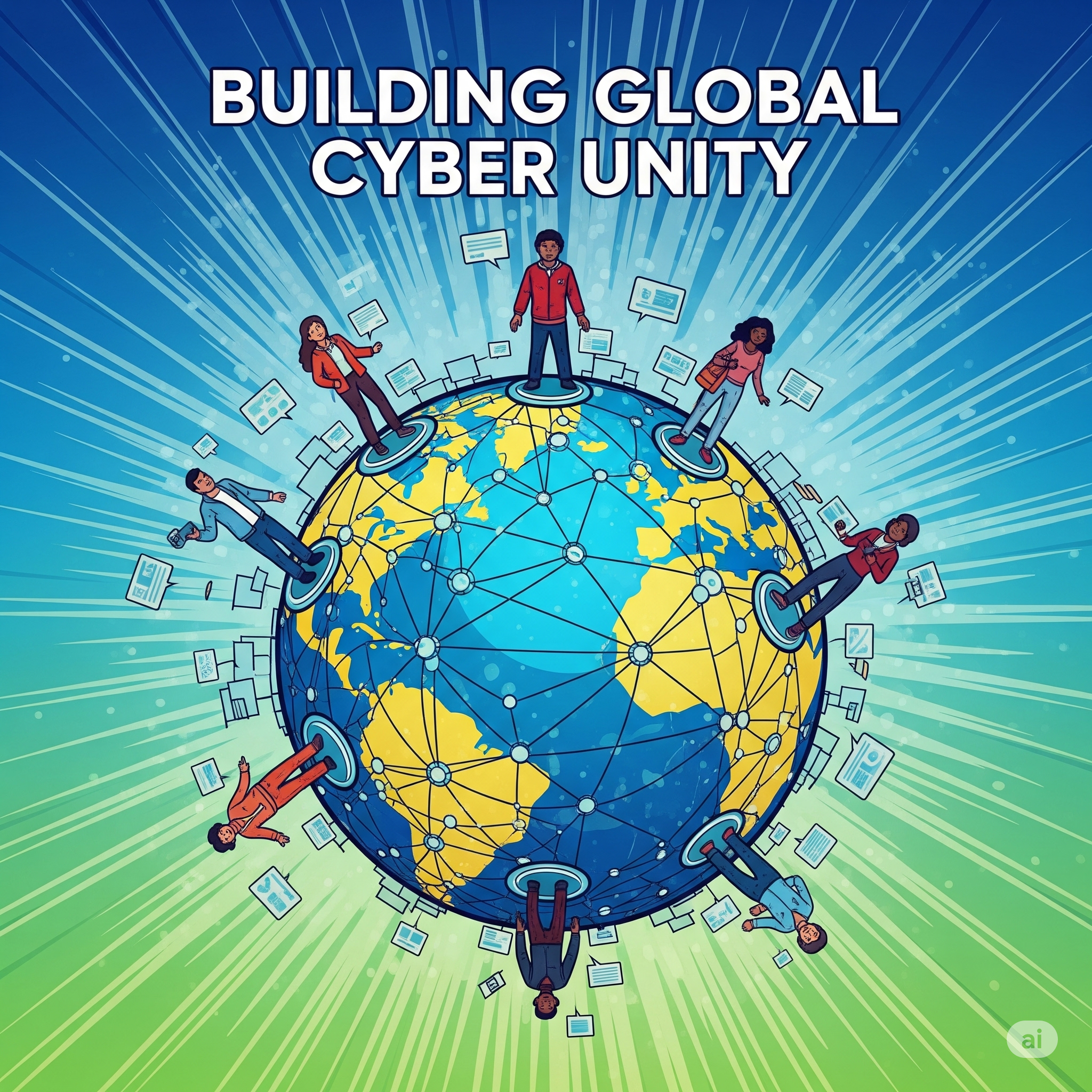
When major nations are at war, international cyber cooperation becomes essential to counter global cyber threats. State-sponsored cyberattacks, like those targeting critical infrastructure or spreading disinformation, transcend borders, demanding coordinated defenses. As the final piece in our series on wartime cybersecurity, this article explores how nations can collaborate to strengthen cybersecurity, share intelligence, and build resilient global systems during conflicts.
The Need for Global Cyber Unity
Wars amplify cyber threats that affect multiple nations simultaneously. A single attack, such as the 2017 WannaCry ransomware, disrupted hospitals and businesses across 150 countries, highlighting the need for international cyber cooperation 1. Conflicts create opportunities for adversaries to exploit shared digital infrastructure, like undersea cables or cloud services, threatening global stability.
- Cross-Border Impact: Attacks on one nation disrupt global markets.
- Shared Vulnerabilities: Common technologies create universal risks.
- Hybrid Warfare: Cyberattacks complement physical military actions.
Transitioning to specific challenges, let’s examine why cooperation is critical yet complex.
Challenges in Wartime Cyber Cooperation
International cyber cooperation faces significant hurdles during conflicts. Geopolitical rivalries often hinder trust, as nations hesitate to share sensitive threat data. A 2024 report noted that 60% of countries withheld cyber intelligence due to sovereignty concerns 2. Other challenges include:
- Differing cybersecurity standards across nations.
- Resource disparities between developed and developing countries.
- Legal barriers to cross-border data sharing.
Despite these obstacles, collaborative frameworks exist. Next, we’ll explore key strategies for global cooperation.
Strategies for Effective Cyber Cooperation
To strengthen international cyber cooperation, nations must align policies, share intelligence, and conduct joint exercises. Below are proven strategies to enhance global cybersecurity during wartime.
Establish Cyber Defense Treaties
Formal agreements, like NATO’s Cyber Defence Pledge, commit nations to mutual defense 3. These treaties outline:
- Protocols for sharing threat intelligence.
- Rules for coordinated incident response.
- Commitments to collective cyber resilience.
For example, NATO’s 2024 agreement expanded cyber defense commitments to include non-member allies 4.
Conduct Joint Cyber Exercises
Simulated cyberattacks prepare nations for real-world threats. The NATO Cooperative Cyber Defence Centre of Excellence (CCDCOE) hosts annual Locked Shields exercises, involving 40 countries in 2025 5. These drills:
- Test response to complex attacks.
- Improve interoperability among nations.
- Identify gaps in collective defenses.
Share Real-Time Threat Intelligence
Timely intelligence sharing is critical. Platforms like the EU’s Cyber Rapid Response Teams enable nations to exchange data on emerging threats 6. In 2023, such sharing helped thwart a coordinated attack on European financial systems 7.
Transitioning to existing frameworks, let’s examine global organizations driving cooperation.
Global Organizations Leading Cooperation
Several organizations facilitate international cyber cooperation, providing platforms for collaboration and standardization. Key players include:
- INTERPOL: Its Global Cybercrime Programme coordinates cross-border investigations, disrupting cybercriminal networks 8.
- UN Group of Governmental Experts (GGE): Develops norms for responsible state behavior in cyberspace 9.
- ENISA: The EU’s cybersecurity agency supports member states with training and threat assessments 10.
These groups foster trust and alignment, but public-private partnerships are equally vital. Let’s explore their role next.
Public-Private Partnerships in Global Defense
Private sector involvement is crucial for international cyber cooperation, as companies operate critical systems like cloud services and telecom networks. The U.S. Cybersecurity and Infrastructure Security Agency (CISA) leads the Joint Cyber Defense Collaborative (JCDC), partnering with tech firms to share intelligence 11. Benefits include:
- Access to private sector threat data.
- Faster response to global incidents.
- Development of universal security standards.
For instance, in 2024, Microsoft and CISA collaborated to mitigate a global supply chain attack, saving billions in potential losses 12. However, aligning incentives remains a challenge.
Next, let’s discuss the role of technology in enhancing cooperation.
Technology as a Catalyst for Cooperation
Emerging technologies strengthen international cyber cooperation by enabling secure communication and advanced defenses. Below are key innovations driving global efforts.
AI for Threat Intelligence Sharing
AI platforms analyze and disseminate threat data across borders in real time. A 2025 NATO pilot used AI to share intelligence 50% faster than manual methods 13. Benefits include:
- Automated threat pattern recognition.
- Reduced latency in alerts.
- Enhanced scalability for global networks.
Blockchain for Secure Collaboration
Blockchain ensures tamper-proof data sharing among nations. A 2024 trial by the G7 secured intelligence exchanges with 98% reliability 14. Applications include:
- Verifying threat intelligence sources.
- Securing cross-border communications.
- Tracking attack origins.
Quantum-Resistant Cryptography
With quantum computing threatening encryption, nations must adopt post-quantum standards. NIST’s 2024 guidelines provide a framework for global adoption 15. Early implementation ensures secure cooperation during conflicts.
These technologies bridge gaps, but challenges like adoption costs persist. Let’s explore additional hurdles.
Overcoming Barriers to Global Cooperation
While international cyber cooperation is essential, barriers remain. Developing nations often lack resources for advanced cybersecurity, creating weak links. A 2025 World Bank study found that 70% of low-income countries had inadequate cyber defenses 16. Other issues include:
- Distrust Among Nations: Historical rivalries limit data sharing.
- Regulatory Misalignment: Varying laws complicate collaboration.
- Technological Gaps: Uneven adoption of AI and quantum tools.
To address these, wealthier nations must support capacity building through funding and training. Next, we’ll discuss workforce development.
Building a Global Cyber Workforce
A skilled workforce underpins international cyber cooperation. Cybersecurity professionals must understand cross-border threats and collaboration protocols. A 2025 ISC2 report highlighted a global shortage of 4 million cyber experts 17. Training initiatives include:
- Global Certifications: Programs like EC-Council’s CEH offer standardized skills 18.
- Joint Training Programs: NATO’s CCDCOE trains multinational teams 5.
- Scholarships: CISA’s CyberCorps funds education for cyber professionals 19.
These efforts ensure nations can collaborate effectively. Let’s examine the future of cooperation.
The Future of Wartime Cyber Cooperation
As conflicts evolve, international cyber cooperation must adapt. Emerging threats like AI-driven attacks and quantum vulnerabilities demand proactive strategies. By 2030, experts predict 80% of cyberattacks will leverage AI, requiring unified defenses 20. Future priorities include:
- Developing global cyber norms.
- Expanding public-private partnerships.
- Investing in resilient digital infrastructure.
Collaboration will be the cornerstone of global security. Let’s reflect on the broader series context.
Series Recap
This article concludes our series on wartime cybersecurity. Revisit related topics to deepen your understanding:
- Cybersecurity in Times of War – Overview of the series.
- Cybersecurity Concerns During Global Conflicts – Risks amplified by war.
- Protecting Critical Infrastructure – Strategies for securing vital systems.
- Countering Disinformation – Combating false narratives.
- Private Sector Defense – Corporate cybersecurity strategies.
Thank you for following our series. Stay informed and vigilant in the evolving cyber landscape.
References Cited:
- 1 BBC: WannaCry Impact
- 2 CSIS: Cyber Intelligence Sharing
- 3 NATO: Cyber Defence Pledge
- 4 NATO: 2024 Cyber Agreement
- 5 CCDCOE: Locked Shields
- 6 EU: Cyber Rapid Response Teams
- 7 Reuters: EU Financial Attack Thwarted
- 8 INTERPOL: Global Cybercrime Programme
- 9 UN: GGE Cyber Norms
- 10 ENISA: Mission
- 11 CISA: JCDC Overview
- 12 Microsoft: Supply Chain Defense
- 13 NATO: AI Intelligence Sharing
- 14 Wired: Blockchain in Cyber Cooperation
- 15 NIST: Post-Quantum Cryptography
- 16 World Bank: Cyber Capacity
- 17 ISC2: Workforce Gap
- 18 EC-Council: CEH Certification
- 19 CISA: CyberCorps Program
- 20 Forbes: AI Cyber Threats
About The Author