Applying Game Theory to Cybersecurity Strategy and Adversarial Modeling
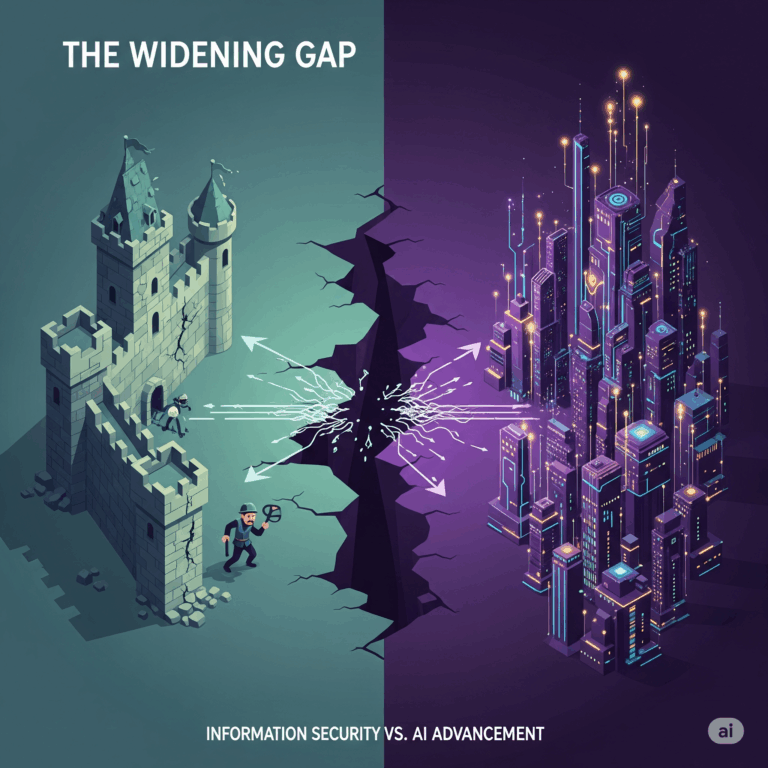
In the ever-evolving landscape of cybersecurity, organizations must stay one step ahead of adversaries to protect valuable assets. One effective approach involves applying game theory to cybersecurity strategy and adversarial modeling. Game theory, a branch of mathematics that studies strategic decision-making, provides valuable insights into the interactions between attackers and defenders. This helps organizations anticipate and prepare for potential threats. In this article, we’ll delve into the application of game theory to cybersecurity and explore its benefits in developing effective adversarial models.
The concept of game theory in cybersecurity is not new, however, its importance has grown significantly in recent years. As cyber-attacks become more sophisticated and frequent, organizations need to adopt a more proactive approach to defense. Game theory, therefore, offers a framework for understanding the strategic interactions between attackers and defenders, allowing organizations to anticipate and prepare for potential threats. By applying game theory to cybersecurity strategy and adversarial modeling, organizations can develop more effective defense mechanisms and improve their overall security posture.
Understanding the Basics of Game Theory in Cybersecurity
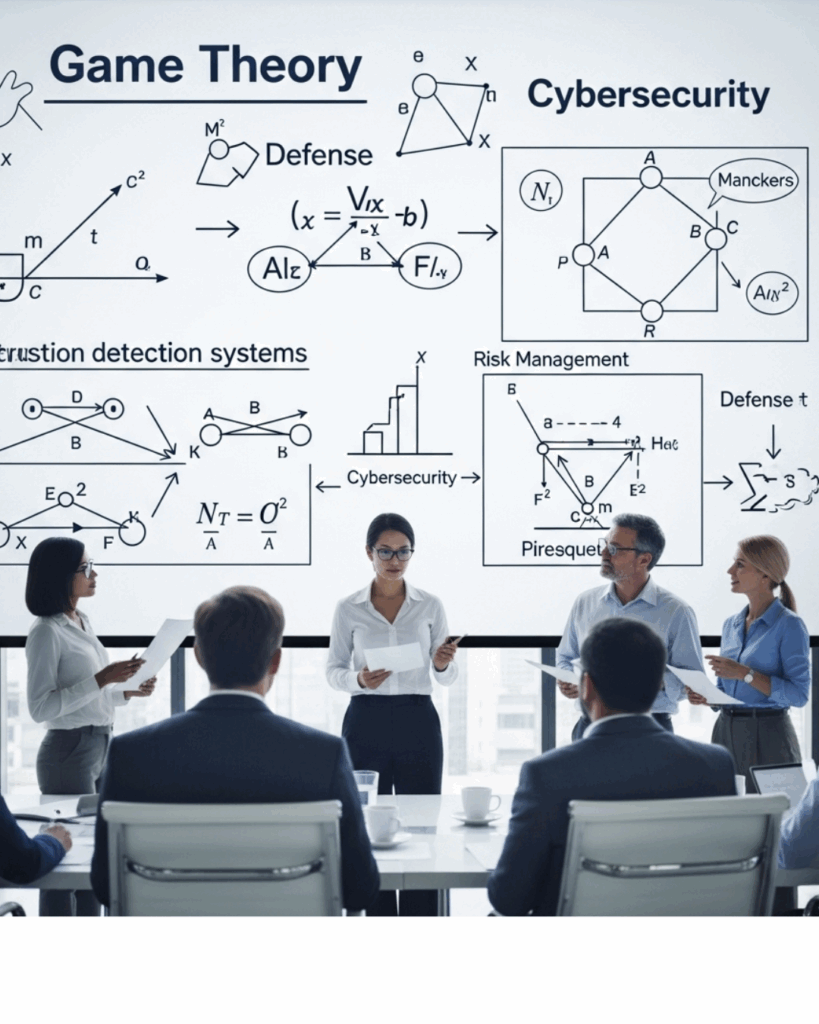
Game theory in cybersecurity involves analyzing the interactions between attackers and defenders as a game. Within this context, the game consists of strategic decision-making, where both parties try to maximize their gains while minimizing their losses. The game is typically represented as a matrix, with rows for the defender’s strategies and columns for the attacker’s strategies. The cells of the matrix contain the payoffs for each strategy combination, representing the game’s outcomes.
The key elements of game theory in cybersecurity include:
- Players: The attacker and the defender, who make strategic decisions to achieve their goals.
- Strategies: The actions taken by the players to achieve their goals, such as launching an attack or implementing a defense mechanism.
- Payoffs: The outcomes of the game, which can be monetary losses, reputational damage, or system compromise.
- Nash Equilibrium: A concept introduced by John Nash, describing the point at which no player can improve their payoff by unilaterally changing their strategy, assuming all other players keep their strategies unchanged.
Applying Game Theory to Adversarial Modeling
Adversarial modeling is a critical component of cybersecurity strategy, as it allows organizations to anticipate and prepare for potential threats. Crucially, by applying game theory to adversarial modeling, organizations can develop more effective models that account for the strategic interactions between attackers and defenders. This approach helps organizations to:
- Identify high-risk attack vectors: By analyzing payoffs for different attack vectors, organizations can pinpoint the most high-risk attacks and prioritize defense efforts accordingly.
- Develop proactive defense mechanisms: Game theory can help organizations develop proactive defense mechanisms that anticipate potential attacks and adapt to changing threat landscapes.
- Improve incident response: By understanding the strategic interactions between attackers and defenders, organizations can develop more effective incident response strategies that minimize attack impact.
- Optimize resource allocation: Game theory can help organizations optimize resource allocation by identifying the most critical defense areas and allocating resources accordingly.
The application of game theory to adversarial modeling can be demonstrated through game-theoretic models such as the Signaling Game and the Colonel Blotto game. These models help organizations understand the strategic interactions between attackers and defenders and develop more effective defense mechanisms.
For example, in the Signaling Game, the defender sends a signal to the attacker indicating their level of defense. The attacker then decides whether to launch an attack based on the signal received. This game helps organizations understand strategic interactions between attackers and defenders and develop more effective defense mechanisms.
Similarly, the Colonel Blotto game is a game-theoretic model representing competition between two players with limited resources. This game helps organizations understand how to allocate resources effectively to defend against potential attacks.
Real-World Applications of Game Theory in Cybersecurity
Game theory has numerous real-world applications in cybersecurity, including:
- Network security: Game theory can be used to develop more effective network security mechanisms, such as intrusion detection systems and firewalls.
- Cloud security: Game theory can help organizations develop more effective cloud security mechanisms, for instance, cloud-based intrusion detection systems.
- Incident response: Game theory can be used to develop more effective incident response strategies that minimize attack impact.
- Risk management: Game theory can help organizations understand and manage risk more effectively by identifying high-risk attack vectors and prioritizing defense efforts accordingly.
Conclusion
In conclusion, applying game theory to cybersecurity strategy and adversarial modeling provides valuable insights into the interactions between attackers and defenders. Ultimately, by understanding these strategic interactions, organizations can develop more effective defense mechanisms and improve their overall security posture. As the threat landscape continues to evolve, the importance of game theory in cybersecurity will only continue to grow.
Therefore, by adopting a game-theoretic approach to cybersecurity, organizations can stay one step ahead of adversaries and protect their valuable assets. Whether it’s identifying high-risk attack vectors, developing proactive defense mechanisms, or improving incident response, game theory can help organizations develop more effective cybersecurity strategies.
References Cited
- Association for Computing Machinery. A Colonel Blotto Game for Interdependence – Aware Cyber-Physical Systems Security
- Fractional CISO.Cybersecurity Game Theory in Incident Response.2022
About The Author