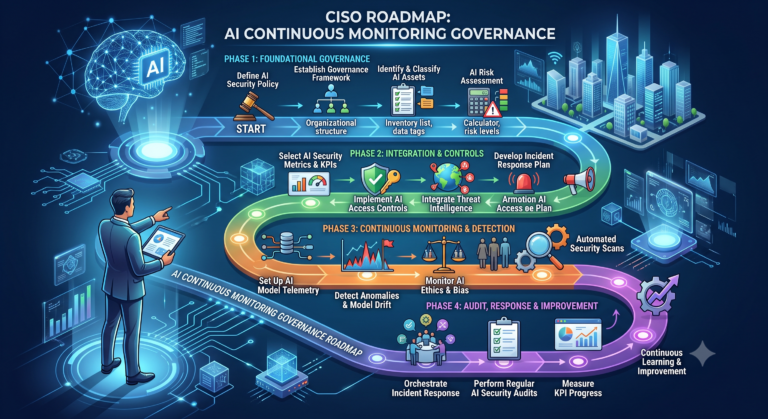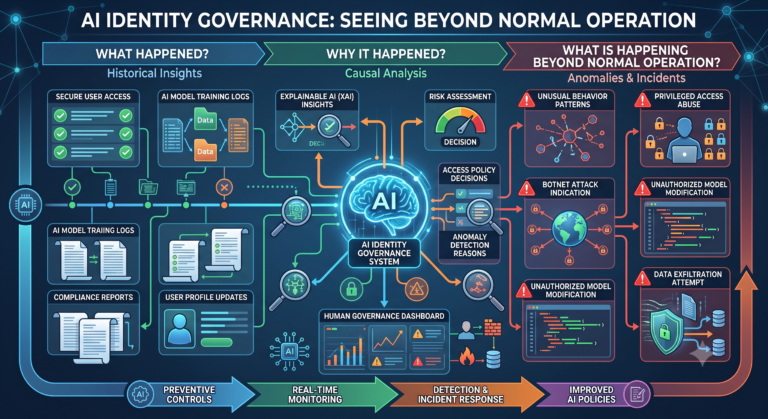

Artificial intelligence (AI) is transforming industries, from healthcare to finance, by automating tasks and providing deep insights. However, its power comes with significant risks, especially when AI security boundaries are not properly configured. Without these boundaries, AI systems can inadvertently access confidential information, leading to data breaches, privacy violations, and regulatory penalties. This series explores why AI security boundaries are essential and what happens when they’re absent, breaking the topic into five key areas to help cybersecurity professionals, government teams, and tech-savvy readers safeguard their systems.
Why AI Security Boundaries Are Non-Negotiable
AI systems process vast amounts of data, often including sensitive information like personal health records or financial details. When AI security boundaries are not in place, these systems may retrieve data they aren’t authorized to access. For example, in 2023, a major tech company faced a $1.2 million fine after an AI model accessed customer data without proper permissions, violating GDPR 1. This incident underscores the need for robust boundaries to prevent unauthorized access and protect organizational integrity. In this series, we’ll dive into the mechanisms and strategies to ensure AI operates within safe limits.
What Happens When AI Lacks Security Boundaries
The absence of AI security boundaries can lead to catastrophic consequences. Imagine an AI system deployed in a hospital that accidentally retrieves patient records it wasn’t meant to access. Such a breach not only violates privacy laws but also erodes trust. Worse, if the AI is connected to external networks, this data could be exfiltrated by malicious actors. A 2024 study by the Ponemon Institute found that 60% of organizations using AI reported unintended data exposure due to poor boundary configurations 2. Without proper controls, AI becomes a liability rather than an asset, highlighting the urgency of this issue.
Key Areas of Focus in This Series
To tackle the complexities of AI security boundaries, this series breaks the topic into five actionable subtopics. Each Child Article will provide in-depth insights and practical steps to mitigate risks:
- Understanding the Role of Data Access Controls in AI – Explore how to limit AI’s data access to prevent unauthorized retrieval. .
- Implementing Role-Based Access for AI Systems – Learn how to apply role-based permissions to ensure AI only accesses what it needs. .
- Monitoring AI Activity to Detect Boundary Breaches – Discover tools and techniques to track AI behavior and catch issues early. .
- Ensuring Compliance with AI Security Regulations – Understand how to align AI boundaries with laws like GDPR and CCPA. .
- Training Teams to Maintain AI Security Boundaries – Find out how to educate employees to support and enforce AI security measures. .
The Risk of Uncontrolled Data Access
One of the most significant dangers of not having AI security boundaries is the potential for AI to access confidential information. For instance, an AI model trained on a company’s internal database might inadvertently pull sensitive HR data if boundaries aren’t set. This isn’t just a hypothetical scenario—real-world cases have shown the damage. In 2022, a financial institution’s AI chatbot exposed customer account details because it lacked proper access controls, leading to a public relations crisis 3. Such incidents demonstrate that without clear boundaries, AI can easily overstep its intended scope, putting organizations at risk.
How AI Retrieves Confidential Information Without Boundaries
AI systems often rely on large datasets for training and decision-making. If these datasets aren’t segmented properly, AI can access information it shouldn’t. For example:
- Unfiltered Data Access: AI might pull from a database containing both public and private data, unable to distinguish what’s off-limits.
- Inference Attacks: Even with limited access, AI can infer sensitive information. A 2024 study showed that AI models could reconstruct personal data from anonymized datasets with 85% accuracy 4.
- Third-Party Integrations: AI systems connected to external APIs may retrieve data from unauthorized sources if boundaries aren’t enforced.
This lack of control can lead to legal, financial, and ethical consequences, making it critical to establish strict AI security boundaries.
The Role of Technology in Securing AI
Technology plays a pivotal role in enforcing AI security boundaries. Tools like data loss prevention (DLP) systems can monitor and restrict AI’s access to sensitive information. Additionally, encryption ensures that even if AI accesses data, it remains unreadable without proper keys. For instance, Microsoft Azure offers AI-specific security features that allow organizations to define granular access controls 5. By leveraging such technologies, organizations can minimize the risk of AI overstepping its boundaries and accessing confidential information.
Compliance and Legal Implications
Government and compliance teams must pay close attention to AI security. Regulations like the California Consumer Privacy Act (CCPA) and GDPR mandate strict data access controls, and AI systems are not exempt. Without AI security boundaries, organizations risk non-compliance, which can result in hefty fines. For example, GDPR fines can reach up to €20 million or 4% of annual global turnover, whichever is higher 1. Ensuring that AI operates within legal boundaries isn’t just a technical issue—it’s a business imperative that protects against regulatory fallout.
Building a Culture of AI Security Awareness
Beyond technology, human factors are crucial in maintaining AI security boundaries. Employees need to understand the importance of configuring and monitoring these boundaries. Regular training can help teams recognize when AI might be accessing data it shouldn’t. For example, a cybersecurity team should be trained to audit AI logs regularly to spot anomalies. A 2025 report by Gartner emphasized that organizations with strong security cultures reduced AI-related breaches by 40% 6. Fostering this awareness ensures that AI remains a tool for progress, not a source of risk.
The Cost of Inaction
Failing to implement AI security boundaries can be costly. Beyond financial penalties, organizations face reputational damage that can take years to repair. Customers lose trust when their data is mishandled, and partners may hesitate to collaborate with a company known for security lapses. Moreover, the time and resources spent on incident response—such as notifying affected parties and conducting forensic investigations—can drain budgets. A proactive approach to AI security is far more cost-effective than dealing with the aftermath of a breach.
Taking the First Step Toward AI Security
Getting started with AI security boundaries doesn’t have to be overwhelming. Begin by assessing your current AI systems to identify where boundaries are lacking, as discussed in our first Child Article. From there, implement role-based access controls and monitoring tools to ensure AI operates within safe limits. Each article in this series will provide actionable steps to build a comprehensive security strategy, helping you protect your organization from the risks of uncontrolled AI access.
The Future of AI Security
As AI continues to evolve, so will the challenges of securing it. Emerging technologies like federated learning and differential privacy offer promising ways to enhance AI security boundaries by allowing AI to learn without directly accessing sensitive data. However, these solutions are still in their infancy, and organizations must rely on current best practices to stay secure. By following the strategies outlined in this series, you can future-proof your AI systems against evolving threats.
References Cited:
1 European Union – GDPR Fines and Penalties: https://www.gdpr.eu/fines-and-penalties/
2 Ponemon Institute – 2024 AI Security Report: https://www.ponemon.org/ai-security-report-2024
3 TechCrunch – Financial Chatbot Data Breach 2022: https://techcrunch.com/2022/financial-chatbot-breach
4 Nature – AI Inference Attacks on Anonymized Data: https://www.nature.com/articles/ai-inference-attacks-2024
5 Microsoft Azure – AI Security Features: https://azure.microsoft.com/en-us/solutions/ai-security
6 Gartner – 2025 Cybersecurity Culture Report: https://www.gartner.com/cybersecurity-culture-2025
About The Author