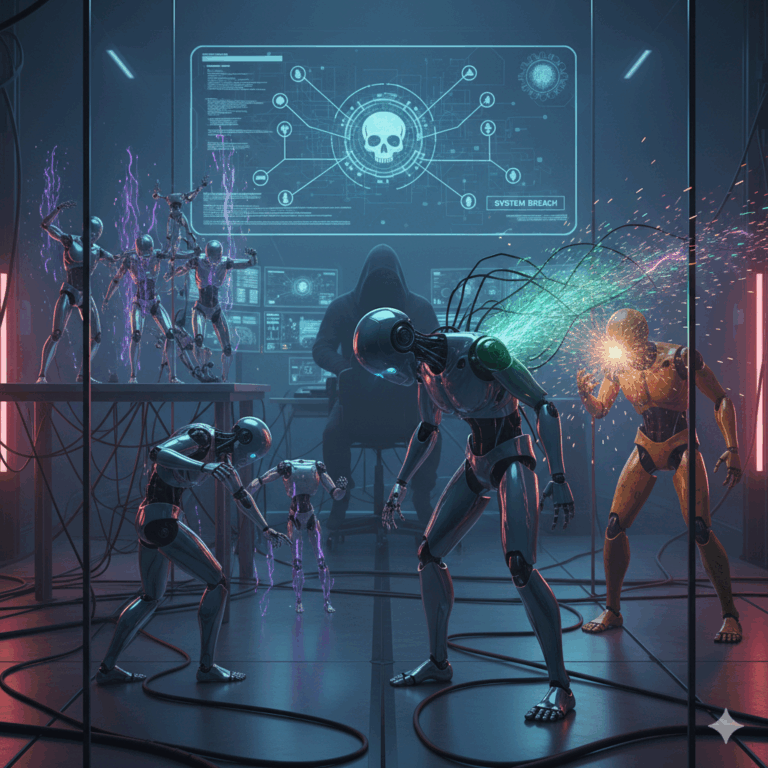
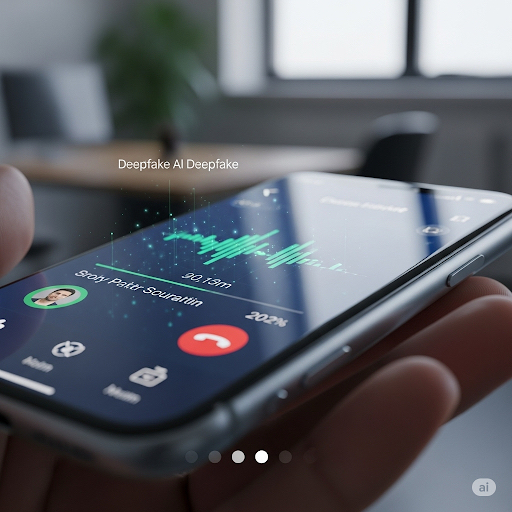
The rapid advancement of artificial intelligence has ushered in a new era of cybersecurity threats, with AI impersonation threats taking center stage in 2025. In early July 2025, attackers leveraged AI-generated voice clones to impersonate high-profile U.S. government officials, including Secretary of State Marco Rubio and White House Chief of Staff Susie Wiles, in a bold attempt to steal sensitive information. These incidents, widely discussed on platforms like X, highlight the growing danger of deepfake audio in targeted social engineering attacks against government entities. As AI technologies become more accessible, cybercriminals are exploiting them to bypass traditional security measures, posing unprecedented risks to national security. This article explores the mechanics of AI impersonation, its implications for government systems like Microsoft SharePoint, and actionable strategies to mitigate these sophisticated threats.
Understanding AI Impersonation and Deepfake Technology
AI impersonation involves using artificial intelligence to create highly convincing replicas of a person’s voice, image, or behavior, often referred to as deepfakes. These tools rely on machine learning models, such as generative adversarial networks (GANs), to analyze and replicate patterns in audio or visual data. In the case of the July 2025 attacks, adversaries used voice cloning technology to mimic U.S. government officials, crafting audio that was nearly indistinguishable from the real thing. With as little as a few seconds of audio, attackers can generate realistic voice clones, enabling targeted social engineering attacks like spear-phishing or vishing (voice phishing).
The accessibility of AI tools has democratized deepfake creation. Open-source models and commercial software now allow even low-skill attackers to produce high-quality fakes, lowering the barrier to entry for cybercriminals. According to a 2025 report by CrowdStrike, vishing attacks surged by 442% in the second half of 2024, driven by AI-generated audio. This trend underscores the urgency for government agencies to adapt to these evolving threats, particularly for systems like SharePoint, which store sensitive data and are integral to operations in environments like GCC, GCC High, and DoD.
The July 2025 Attacks: A Case Study in AI-Driven Social Engineering
In early July 2025, attackers targeted high-ranking U.S. officials with AI-generated voice clones of Marco Rubio and Susie Wiles. These attacks, reported on X, aimed to extract sensitive information by convincing targets to disclose credentials or approve unauthorized actions. The attackers likely used publicly available audio, such as speeches or interviews, to train their AI models, creating convincing impersonations. Such tactics exploit human trust, bypassing technical safeguards like firewalls or intrusion detection systems.
These incidents are part of a broader wave of AI impersonation threats targeting government entities. The use of deepfake audio aligns with a 223% increase in deepfake tool trading on dark web forums from Q1 2023 to Q1 2024, as noted by Recorded Future. The attacks highlight vulnerabilities in government communication protocols, where a single compromised interaction could lead to unauthorized access to platforms like SharePoint, which hosts classified documents and critical workflows.
Implications for Government SharePoint Systems
Microsoft SharePoint, widely used in U.S. government environments, is a prime target for AI-driven attacks due to its role in managing sensitive data. The recent CVE-2025-53770 (ToolShell) vulnerability in SharePoint Server, reported in July 2025, exacerbates these risks. This critical remote code execution flaw (CVSS 9.8) allows unauthenticated attackers to access content, file systems, and internal configurations. When combined with AI impersonation, attackers could trick administrators into granting access or executing malicious code, amplifying the impact of such vulnerabilities.
For example, a deepfake voice call impersonating a senior official could convince a SharePoint administrator to reset credentials or disable security protocols, providing attackers with a foothold to exploit ToolShell. Government agencies, particularly those in GCC High and DoD environments, rely on SharePoint for secure collaboration, making these systems high-value targets. The combination of technical vulnerabilities and social engineering via deepfakes creates a perfect storm for data breaches and operational disruptions.
The Broader Threat Landscape: AI and Cybersecurity
AI impersonation threats extend beyond government officials to other sectors, including finance and healthcare. A notable case in February 2025 involved a Hong Kong bank losing $25 million after scammers used deepfake videos to impersonate executives during a conference call. Similarly, in 2019, a UK energy firm lost €220,000 to a deepfake voice scam. These incidents illustrate the scalability of AI-driven attacks, where adversaries can target multiple organizations with minimal effort.
State-sponsored actors are also leveraging AI. Groups like China’s Salt Typhoon and Russia’s APT28 have integrated generative AI to enhance malware, phishing campaigns, and reconnaissance. For instance, APT28’s STEELHOOK malware was modified using AI to evade detection, posing risks to government infrastructure. These trends emphasize the need for robust defenses against AI-driven threats, particularly for systems like SharePoint that are critical to national security.
Mitigating AI Impersonation Threats: Technical Solutions
To combat AI impersonation threats, government agencies must adopt a multi-layered cybersecurity approach. Below are key technical strategies:
Strengthening Authentication Protocols
Implementing cryptographic identity verification is critical to preventing unauthorized access. Tools like Beyond Identity’s RealityCheck use real-time credential validation to ensure the authenticity of users on platforms like Microsoft Teams, which often integrate with SharePoint. Multi-factor authentication (MFA) with biometrics or hardware tokens can further reduce the risk of compromised credentials.
Deploying AI-Based Detection Systems
Advanced AI detection systems can identify deepfake audio and video by analyzing subtle anomalies, such as unnatural speech patterns or visual artifacts. Companies like DeepTrace and Sensity offer solutions that integrate with government systems to flag suspicious communications. However, these tools must evolve to keep pace with improving deepfake technology, which often outstrips detection capabilities.
Securing SharePoint Environments
To address vulnerabilities like CVE-2025-53770, agencies must:
- Apply Microsoft’s security updates as soon as available.
- Conduct regular web shell scans to detect malicious code.
- Isolate SharePoint servers from public internet access.
- Implement network segmentation to limit lateral movement by attackers.
CISA’s guidance recommends advanced threat hunting and endpoint detection to identify exploitation attempts early.
Human-Centric Defenses: Training and Awareness
Technical solutions alone are insufficient; human vigilance is equally critical. Government employees must be trained to recognize deepfake indicators, such as:
- Inconsistent audio quality or unnatural pauses in speech.
- Requests for sensitive actions (e.g., credential resets) via unverified channels.
- Suspicious context, like urgent demands from “senior officials.”
Regular cybersecurity training, including simulated phishing and vishing exercises, can prepare staff to identify and report AI impersonation attempts. Agencies should also establish strict verification protocols, such as requiring in-person or cryptographically verified confirmation for high-risk actions.
Policy and Regulation: A Call for Action
The rise of AI impersonation threats demands updated cybersecurity policies. NIST’s Cybersecurity Framework 2.0 emphasizes adaptive risk management, including AI-specific threat modeling. Government agencies should:
- Mandate AI-resistant authentication for all critical systems.
- Develop standards for deepfake detection and response.
- Collaborate with private sector innovators to accelerate anti-deepfake technology.
Legislation, such as the U.S.’s proposed AI Accountability Act, aims to regulate deepfake misuse, but enforcement remains challenging due to the global nature of cybercrime. International cooperation, as advocated by CISA, is essential to address cross-border threats.
Future Outlook: Evolving Threats and Defenses
As AI technology advances, so will the sophistication of deepfake attacks. By 2026, Gartner predicts that 30% of cyberattacks will involve generative AI, up from 10% in 2024. Government agencies must invest in:
- Research and Development: Funding for AI-based cybersecurity solutions, including next-generation detection tools.
- Public-Private Partnerships: Collaboration with tech companies to share threat intelligence and develop countermeasures.
- Proactive Threat Hunting: Continuous monitoring of systems like SharePoint to detect and neutralize threats before exploitation.
The July 2025 attacks on U.S. officials serve as a wake-up call, highlighting the need for proactive measures to protect government infrastructure. By combining technical defenses, employee training, and robust policies, agencies can stay ahead of AI impersonation threats.
The incidents involving Marco Rubio and Susie Wiles underscore the urgent need to address AI impersonation threats in government cybersecurity. As deepfake technology becomes more accessible, attackers will continue to exploit human trust and technical vulnerabilities to target critical systems like SharePoint. By implementing strong authentication, leveraging AI detection tools, and fostering a culture of cybersecurity awareness, government agencies can mitigate these risks. Staying vigilant and adaptive in the face of evolving AI-driven threats is not just a necessity—it’s a matter of national security.
References Cited
- CrowdStrike. (2025). 2025 Global Threat Report. https://www.crowdstrike.com/global-threat-report/
- Recorded Future. (2024). Deepfake Tool Trading on Dark Web Forums. https://www.recordedfuture.com/
- Microsoft Security Response Center. (2025). CVE-2025-53770 Advisory. https://msrc.microsoft.com/
- CISA. (2025). Guidance on SharePoint Vulnerability CVE-2025-53770. https://www.cisa.gov/
- NIST. (2024). Cybersecurity Framework 2.0. https://www.nist.gov/cyberframework
- The Hacker News. (2025). AI-Driven Cybercrime Trends. https://thehackernews.com/
About The Author