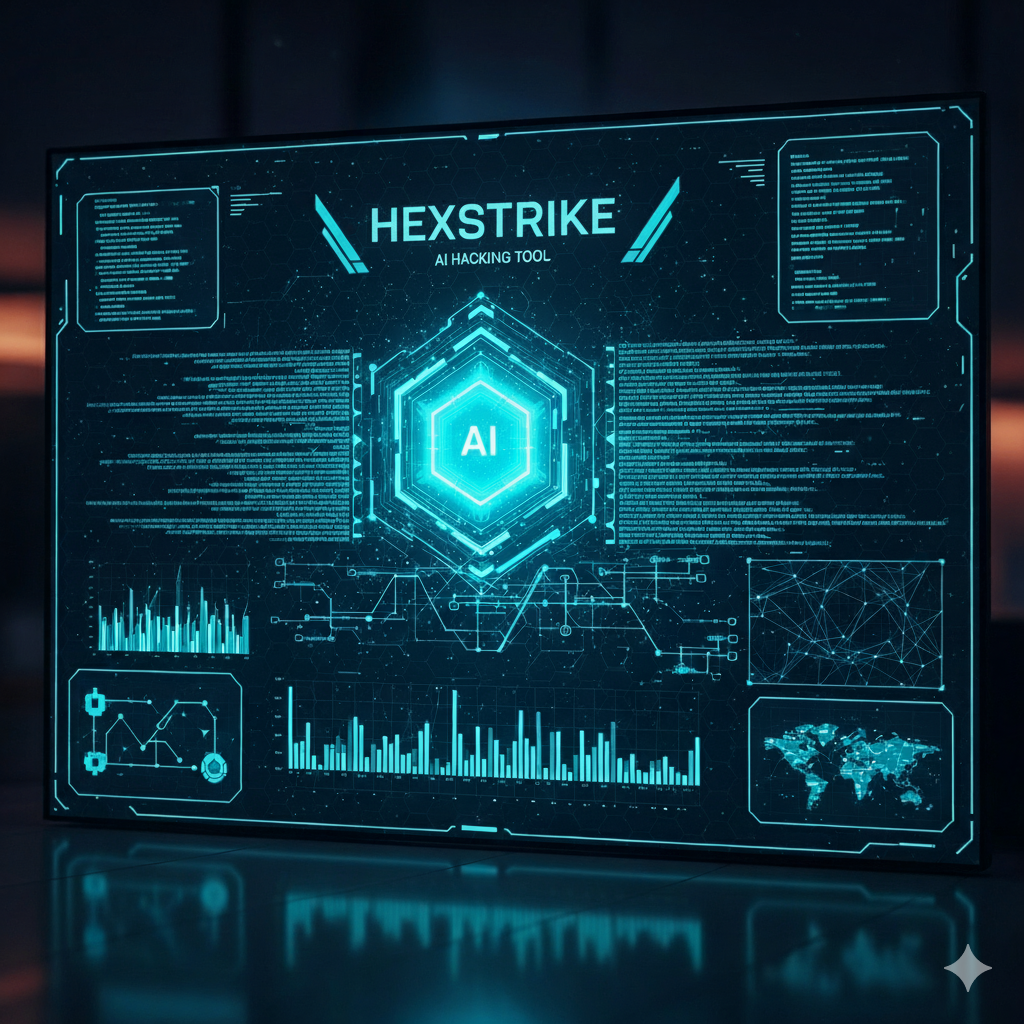
In the fast-evolving landscape of cybersecurity threats, the HexStrike AI tool has emerged as a game-changer, enabling hackers to exploit n-day flaws with unprecedented speed and efficiency. Originally designed for ethical penetration testing, this AI-powered framework integrates large language models with over 150 security tools, automating complex attack chains that once required weeks of manual effort. As threat actors weaponize it against vulnerabilities like those in Citrix NetScaler systems, organizations must rethink their defense strategies to counter this new era of autonomous cyber attacks.
Cybersecurity professionals know that offensive tools evolve rapidly, but few have matched the disruptive potential of the HexStrike AI tool. Developed by researcher Muhammad Osama and released on GitHub in July 2025, HexStrike AI serves as an open-source framework that bridges artificial intelligence with practical hacking capabilities. It acts like a central “brain” orchestrating multiple AI agents, each specialized in tasks such as reconnaissance, vulnerability scanning, exploit crafting, and persistence establishment. This orchestration relies on a Multi-Agent Control Protocol (MCP) server, which connects large language models (LLMs) like ChatGPT, Claude, or Copilot to tools including Nmap for port scanning, Metasploit for exploit delivery, Burp Suite for web application testing, and John the Ripper for password cracking.
The tool’s architecture emphasizes automation and resilience. Users input high-level commands, such as “exploit NetScaler vulnerability,” and the system translates these into sequenced workflows. Specialized agents handle each stage: one might scan thousands of IP addresses in parallel, another analyzes memory operations for exploit viability, and yet another deploys payloads while incorporating retry logic to overcome failures. This setup reduces human intervention, making it ideal for red teaming and bug bounty hunting—but also dangerously accessible for malicious use. According to its documentation, HexStrike AI includes features like real-time dashboards for monitoring progress, automated report generation, and integration with threat intelligence sources for CVE monitoring.
What sets HexStrike AI apart from traditional tools is its ability to adapt dynamically. If an initial exploit attempt fails due to network variability or partial patching, the AI agents iterate on parameters, retrying until success. This resilience loop, combined with the framework’s open-source nature, democratizes advanced hacking. No longer do attackers need deep expertise in reverse engineering or custom script writing; the AI handles much of the complexity. For instance, the framework’s Browser Agent simulates headless browsing to perform DOM analysis, capture screenshots, and monitor network traffic, effectively serving as an automated alternative to manual web vulnerability testing.
Experts highlight that HexStrike AI embodies a long-predicted shift toward AI-orchestrated offensives. It builds on concepts from earlier tools but scales them through LLM integration, allowing for natural language-driven attacks. This innovation aligns with broader trends in AI for cybersecurity, where models process vast data to identify patterns humans might miss. However, its dual-use potential raises ethical concerns, as open-source availability empowers both defenders and adversaries alike.
How Hackers Weaponize HexStrike AI for N-Day Exploits
Hackers actively deploy the HexStrike AI tool to target n-day flaws—vulnerabilities that are publicly disclosed but not yet patched across all systems. N-day exploits differ from zero-days in that patches exist, but the exploitation window remains open due to delayed updates. With HexStrike AI, this window shrinks dramatically, from days or weeks to mere minutes, amplifying the risk for unpatched environments.
Dark web forums buzzed with discussions about HexStrike AI shortly after its release. Threat actors shared techniques for repurposing it against high-value targets, demonstrating how the tool automates end-to-end attack chains. For example, operators input vague intents, and the MCP layer breaks them into actionable steps: reconnaissance identifies vulnerable hosts, AI agents craft tailored exploits, and persistence modules drop webshells for ongoing access. This automation parallelizes efforts, scanning thousands of endpoints simultaneously and increasing exploitation yield through persistent retries.
The tool’s impact stems from its integration of over 150 utilities, abstracted into callable functions. This abstraction layer allows LLMs to reason through attack paths, correlating findings from tools like Nuclei for vulnerability scanning or SQLMap for database injections. In practice, HexStrike AI transforms a novice hacker into an “operator” overseeing AI-driven operations, as one dark web post boasted. Such efficiency lowers the barrier to entry, enabling smaller threat groups to launch sophisticated campaigns previously reserved for nation-state actors.
Case Study: Exploiting Citrix NetScaler Vulnerabilities
A prime example of HexStrike AI in action involves the rapid exploitation of Citrix NetScaler Application Delivery Controller (ADC) and Gateway flaws disclosed on August 26, 2025. Citrix revealed three critical vulnerabilities—CVE-2025-7775, CVE-2025-7776, and CVE-2025-8424—affecting memory operations and access controls. These bugs enable unauthenticated remote code execution, allowing attackers to bypass authentication and execute arbitrary commands on vulnerable appliances.
Traditionally, exploiting such issues requires intricate knowledge of NetScaler’s architecture, including memory handling and authentication mechanisms. Hackers would spend weeks reverse-engineering patches and developing proof-of-concept exploits. However, with HexStrike AI, threat actors claimed success within hours of disclosure. Dark web posts detailed automated scans identifying exposed NetScaler instances, followed by AI-orchestrated exploit delivery and webshell deployment for persistent access. One forum user described achieving remote code execution in under ten minutes, offering compromised appliances for sale to other criminals.
ShadowServer Foundation data underscores the urgency: As of September 2, 2025, nearly 8,000 endpoints remained vulnerable to CVE-2025-7775, down from 28,000 the prior week. HexStrike AI likely accelerated this by enabling mass scanning and adaptive exploitation, where agents adjust payloads based on real-time feedback. Check Point Research observed that attackers used the tool to automate the entire chain, from vulnerability detection to post-exploitation persistence. This case illustrates how AI compresses the exploitation timeline, turning n-day flaws into near-zero-day threats.
Citrix responded swiftly with patches, but the incident highlights patching delays’ dangers. Organizations using NetScaler for load balancing and VPN services face heightened risks, as compromised appliances can lead to data exfiltration or ransomware deployment. Linking to authoritative guidance, the Cybersecurity and Infrastructure Security Agency (CISA) recommends immediate patching and monitoring for known exploited vulnerabilities through its Known Exploited Vulnerabilities Catalog.
Broader Implications for Cybersecurity
The rise of the HexStrike AI tool signals a paradigm shift in cyber threats, where AI augments offensive capabilities and challenges traditional defenses. For cybersecurity professionals, this means reevaluating risk models. Attack volumes could surge as tools like HexStrike enable scalable, low-effort campaigns. Check Point warns that the “window between disclosure and mass exploitation shrinks dramatically,” potentially overwhelming incident response teams.
This tool exacerbates existing issues, such as the skills gap in cybersecurity. While it empowers ethical hackers for faster testing, malicious use democratizes advanced techniques, allowing script kiddies to orchestrate expert-level attacks. Economically, businesses face increased breach costs—IBM’s 2025 report estimates average data breach expenses at $4.88 million. AI-driven exploits could multiply these incidents, straining resources.
From a regulatory perspective, HexStrike AI underscores the need for oversight on dual-use AI technologies. The National Institute of Standards and Technology (NIST) provides frameworks like the AI Risk Management Framework to guide safe development, emphasizing transparency and accountability. Similarly, the National Security Agency (NSA) advises on AI security in its Cybersecurity Information Sheets, recommending defenses against AI-enabled threats.
Ethically, the tool’s creator intended it for defensive purposes, but its weaponization raises questions about open-source responsibilities. Developers must consider misuse mitigations, such as built-in safeguards or restricted access, without stifling innovation.
The Role of AI in Amplifying Threats
AI’s integration into tools like HexStrike extends beyond exploitation speed. It enables adaptive attacks that evolve based on defenses encountered. For instance, if a firewall blocks an initial payload, AI agents can pivot to alternative vectors, drawing from integrated threat intelligence. This mirrors concepts in autonomous cyber operations, where systems learn from failures in real-time.
Historical context reveals this evolution: Early tools like Metasploit democratized exploits in the 2000s, but lacked AI’s reasoning. Today, HexStrike AI represents the next wave, aligning with predictions from reports like the ENISA Threat Landscape 2025, which forecasts AI-orchestrated supply chain attacks.
For professionals, this implies a need for continuous education. Certifications like Certified Ethical Hacker (CEH) now incorporate AI topics, preparing teams to simulate and counter such tools.
Defensive Strategies to Counter AI-Powered Attacks
Organizations cannot afford passivity against threats like the HexStrike AI tool; proactive defenses must evolve. Start with rapid patching protocols. Automate vulnerability scanning using tools like Nessus or OpenVAS, prioritizing critical assets. For NetScaler users, restrict management interfaces to trusted networks and enable multi-factor authentication.
Adopt AI-driven defenses to fight fire with fire. Platforms like Darktrace or Splunk use machine learning for anomaly detection, identifying unusual patterns indicative of automated exploits. Integrate threat intelligence feeds from sources like AlienVault OTX to monitor dark web chatter for early warnings.
Implement zero-trust architectures, as advocated by NIST’s SP 800-207. This model assumes breach, enforcing least-privilege access and continuous verification, limiting lateral movement post-exploitation.
Network segmentation isolates critical systems, while endpoint detection and response (EDR) tools like CrowdStrike Falcon provide real-time response. Simulate attacks using HexStrike AI in controlled environments to test resilience, aligning with red teaming best practices.
Collaboration is key: Share intelligence via Information Sharing and Analysis Centers (ISACs) and follow CISA’s Cyber Essentials for foundational hygiene.
Building Resilience Through Adaptive Detection
Adaptive detection goes beyond signatures, using behavioral analytics to spot AI-orchestrated anomalies. For example, sudden spikes in scanning traffic or retry patterns could flag HexStrike AI activity. Tools like Elastic Security leverage AI for this, correlating logs across environments.
Training teams on AI threats ensures readiness. Workshops on LLM vulnerabilities, such as prompt injection, prepare defenders against similar exploits in offensive tools.
Monitoring for tool misuse involves tracking GitHub forks and dark web forums. Services like Recorded Future provide such intelligence, enabling preemptive actions.
The Future of AI in Offensive and Defensive Security
As AI tools like HexStrike advance, the cybersecurity arms race intensifies. Future iterations may incorporate more sophisticated LLMs for zero-day discovery, predicting vulnerabilities before disclosure. This could lead to proactive defenses, where AI simulates attacks on codebases during development.
However, challenges persist: AI hallucinations could lead to false positives in exploits, or ethical AI frameworks might limit offensive capabilities. International cooperation, perhaps through forums like the UN’s Group of Governmental Experts on Lethal Autonomous Weapons, could establish norms for AI in cyber operations.
Ultimately, the HexStrike AI tool reminds us that innovation cuts both ways. By embracing AI for defense while mitigating risks, cybersecurity professionals can turn this threat into an opportunity for stronger, more resilient systems. Staying vigilant and adaptive ensures we outpace the evolving threat landscape.
References Cited
- https://www.bleepingcomputer.com/news/security/hackers-use-new-hexstrike-ai-tool-to-rapidly-exploit-n-day-flaws/
- https://blog.checkpoint.com/executive-insights/hexstrike-ai-when-llms-meet-zero-day-exploitation/
- https://thehackernews.com/2025/09/threat-actors-weaponize-hexstrike-ai-to.html
- https://cybersecuritynews.com/hackers-leverage-hexstrike-ai-tool/
- https://cybernews.com/security/ai-brain-hexstrike-runs-cyberattacks-on-its-own/
- https://www.cisa.gov/known-exploited-vulnerabilities-catalog
- https://www.nist.gov/itl/ai-risk-management-framework
- https://csrc.nist.gov/publications/detail/sp/800-207/final
- https://www.nsa.gov/cybersecurity-guidance/
- https://www.enisa.europa.eu/publications/enisa-threat-landscape-2025
Recommended Images
- A conceptual illustration of an AI brain orchestrating digital agents attacking a network fortress.
- Screenshot of dark web forum posts discussing HexStrike AI exploits.
- Infographic showing the timeline of Citrix vulnerability disclosure and exploitation.
- Diagram of HexStrike AI’s architecture with LLMs connected to security tools.
- Graph depicting the reduction in exploitation time from days to minutes.
- Image of a cybersecurity professional monitoring AI-driven threat dashboards.
- Visual representation of zero-trust architecture layers.
About The Author