Skip to content
The FedNinjas

The Fedninjas

FedNinjas: Your Guide to Federal Cloud, Cybersecurity, and FedRAMP Success.

Primary Menu
  • Home
  • Blog
  • Podcast
Listen to us on Spotify!

Analyzing the Viability of AI-Augmented Cognitive Security Operations Centers

FedNinjas Team May 29, 2025 4 minutes read
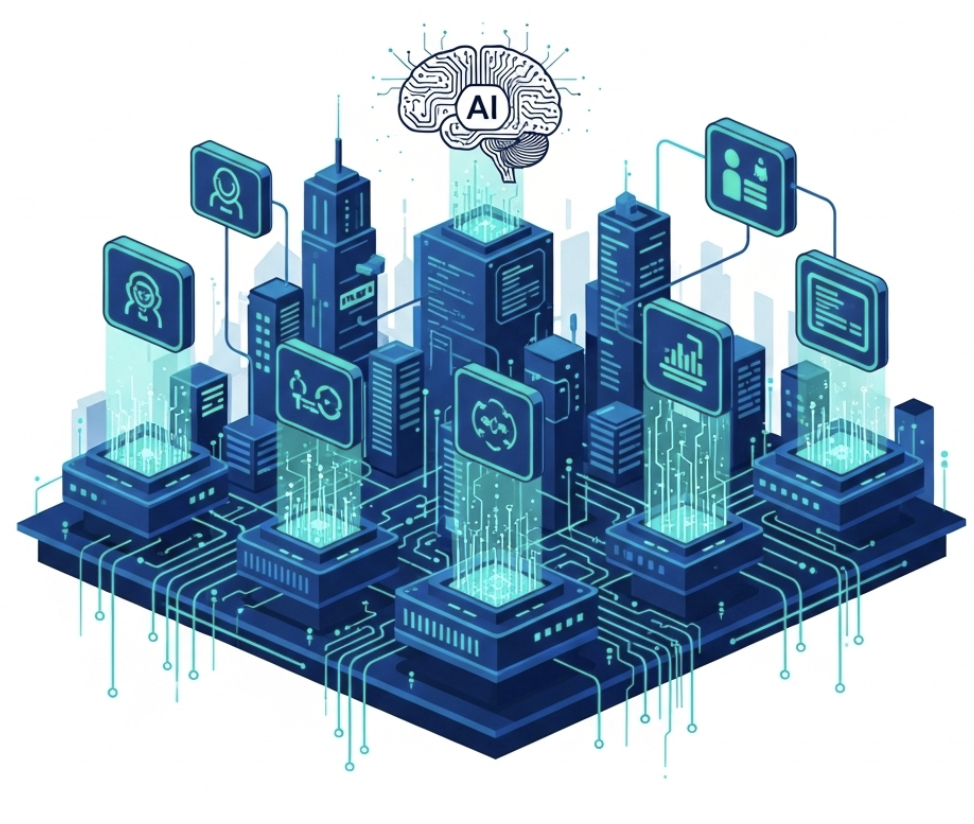
AI-Augemented SOCs

As cybersecurity threats continue to evolve and become more sophisticated, traditional Security Operations Centers (SOCs) face significant challenges in detecting and responding to these threats in a timely and effective manner. The integration of Artificial Intelligence (AI) and cognitive capabilities into SOCs has the potential to revolutionize the field of cybersecurity by providing more agile, proactive, and adaptive defenses. However, it is crucial to analyze the viability of AI-augmented cognitive SOCs to understand their benefits, limitations, and potential barriers to adoption. This article delves into the concept of AI-augmented cognitive SOCs, their components, and their potential to transform cybersecurity operations.

The Concept of AI-Augmented Cognitive SOCs

A traditional SOC is a centralized unit that monitors, detects, and responds to security incidents. However, the increasing volume and complexity of cybersecurity threats have made it challenging for human analysts to keep pace. The integration of AI and cognitive capabilities into SOCs can help address these challenges by automating manual tasks, improving threat detection, and enhancing incident response.

AI-augmented cognitive SOCs leverage advanced analytics, machine learning, and natural language processing to analyze vast amounts of security data, identify patterns, and make predictions. This enables security analysts to focus on high-value tasks, such as threat hunting and incident response, while AI handles more repetitive and time-consuming tasks.

Components of AI-Augmented Cognitive SOCs

AI-augmented cognitive SOCs comprise several components that work together to provide advanced cybersecurity capabilities. These components include:

  • Cognitive Analytics: This involves the application of machine learning and natural language processing to analyze security data, identify patterns, and make predictions.
  • AI-Driven Threat Intelligence: This component provides real-time threat intelligence feeds, which are used to inform and update security controls.
  • Automated Incident Response: This involves the automation of incident response workflows, allowing for faster and more effective response times.
  • Advanced Visualization: This component provides interactive and intuitive visualizations of security data, enabling analysts to quickly identify and respond to threats.
  • Human-Machine Interface: This component enables seamless collaboration between human analysts and AI systems, ensuring that AI-driven insights are actionable and relevant.

The Potential of AI-Augmented Cognitive SOCs to Transform Cybersecurity Operations

The integration of AI and cognitive capabilities into SOCs has the potential to transform cybersecurity operations in several ways. Firstly, AI-augmented cognitive SOCs can improve threat detection rates and reduce false positives, allowing analysts to focus on high-priority threats. Secondly, AI-driven incident response can reduce mean time to detect (MTTD) and mean time to respond (MTTR), ensuring faster and more effective response times. Thirdly, AI-augmented cognitive SOCs can provide advanced threat hunting capabilities, enabling analysts to proactively identify and respond to emerging threats. Finally, AI-augmented cognitive SOCs can improve the overall efficiency and effectiveness of cybersecurity operations, enabling organizations to optimize their security resources and reduce costs.

Several organizations, including government agencies and private sector companies, have already adopted AI-augmented cognitive SOCs to improve their cybersecurity capabilities. For example, the National Security Agency (NSA) has developed an AI-powered threat hunting platform that uses machine learning and analytics to identify and respond to advanced threats[1]. Similarly, companies like IBM and Cisco have developed AI-powered SOCs that provide advanced threat detection and incident response capabilities[2][3].

Challenges and Limitations of AI-Augmented Cognitive SOCs

While AI-augmented cognitive SOCs offer significant benefits, they also face several challenges and limitations. Firstly, the integration of AI and cognitive capabilities into SOCs requires significant investment in technology, infrastructure, and personnel. Secondly, AI systems require high-quality training data to operate effectively, which can be challenging to obtain in a cybersecurity context. Thirdly, AI-augmented cognitive SOCs can create new attack surfaces, which can be exploited by attackers. Finally, the reliance on AI systems can create a skills gap among security analysts, who may require training to work effectively with AI-driven systems.

Conclusion

In conclusion, AI-augmented cognitive SOCs have the potential to revolutionize the field of cybersecurity by providing more agile, proactive, and adaptive defenses. While there are challenges and limitations to the adoption of AI-augmented cognitive SOCs, the benefits of improved threat detection, incident response, and threat hunting capabilities make them a critical component of any comprehensive cybersecurity strategy.

References:

  1. New NSA AI Tool to Automate Cyber Threat Detection
  2. IBM Introduces New Generative AI-Powered Cybersecurity Assistant for Threat Detection and Response Services
  3. Cisco Expands AI-Powered Security Innovations to Fortify Businesses in the AI Era

About The Author

FedNinjas Team

See author's posts

Post navigation

Previous: Streamlining Workflows with AI
Next: Applying and Validating Security Baselines in Production

Related Stories

AI-orchestrated-cyber-espionage-campaign

The Rise of AI Espionage: How Autonomous Agents Are Redefining Cyber Threats

Eric Adams November 17, 2025
Global AI Regulation

The Global Race for AI Regulation

Maurice Matsumori June 8, 2025
AI Cyber Defense

AI as a Defensive Powerhouse

Eric Adams June 4, 2025

Trending News

Claude Mythos and Project Glasswing: a Seismic Shift in Cybersecurity Claude Mythos and Glasswing Butterfly 1

Claude Mythos and Project Glasswing: a Seismic Shift in Cybersecurity

April 21, 2026
The Stryker Cyber Attack: A Mass Remote Wipe of its Managed Devices Stryker affected countries 2

The Stryker Cyber Attack: A Mass Remote Wipe of its Managed Devices

March 19, 2026
Agentic AI is the Attack Surface Agentic AI attack surfaces 3

Agentic AI is the Attack Surface

February 3, 2026
The Rise of Humanoid Robots in Modern Society Humanoid robots getting hackied 4

The Rise of Humanoid Robots in Modern Society

December 29, 2025
The Rise of AI Espionage: How Autonomous Agents Are Redefining Cyber Threats AI-orchestrated-cyber-espionage-campaign 5

The Rise of AI Espionage: How Autonomous Agents Are Redefining Cyber Threats

November 17, 2025
  • 3PAO assessments
  • Access Control
  • Advanced Threat Protection
  • Adversarial Modeling
  • Agentic AI
  • AI
  • AI and Quantum Computing
  • AI in Healthcare
  • AI-Powered SOCs
  • AI-Powered Tools
  • Anomaly Detection
  • API Security
  • Application Security
  • Artificial Intelligence
  • Artificial Intelligence
  • Artificial Intelligence in Cybersecurity
  • Attack Surface Management
  • Attack Surface Reduction
  • Audit and Compliance
  • Autonomous Systems
  • Blockchain
  • Breach Severity
  • Business
  • Career
  • CISA Advisory
  • CISO
  • CISO Strategies
  • Cloud
  • Cloud Computing
  • Cloud Security
  • Cloud Security
  • Cloud Service Providers
  • Compliance
  • Compliance And Governance
  • Compliance and Regulatory Affairs
  • Compliance And Regulatory Requirements
  • Continuous Monitoring
  • Continuous Monitoring
  • Corporate Security
  • Critical Infrastructure
  • Cross-Agency Collaboration
  • Cryptocurrency
  • Cyber Attack
  • Cyber Attacks
  • Cyber Deterrence
  • Cyber Resilience
  • Cyber Threats
  • Cyber-Physical Systems
  • Cyberattacks.
  • Cybercrime
  • Cybersecurity
  • Cybersecurity And Sustainability
  • Cybersecurity Breaches
  • Cybersecurity in Federal Programs
  • Cybersecurity Measures
  • Cybersecurity Strategy
  • Cybersecurity Threats
  • Data Breach
  • Data Breaches
  • Data Privacy
  • Data Protection
  • Data Security
  • Deepfake Detection
  • Deepfakes
  • Defense Readiness
  • Defense Strategies
  • Digital Twins
  • Disaster Recovery
  • Dwell Time
  • Encryption
  • Encryption Technologies
  • Federal Agencies
  • Federal Cloud
  • Federal Cybersecurity
  • Federal Cybersecurity Regulations
  • Federal Government
  • FedRamp
  • FedRAMP Compliance
  • Game Theory
  • GDPR
  • Global Security Strategies
  • Government
  • Government Compliance.
  • Government Cybersecurity
  • Healthcare
  • Healthcare Cybersecurity
  • Healthcare Technology
  • HIPAA Compliance
  • humanoid
  • Humans
  • Incident Response
  • Industrial Control Systems (ICS)
  • Information Security
  • Insider Threats
  • Internet of Things
  • Intrusion Detection
  • IoT
  • IoT Security
  • IT Governance
  • IT Security
  • Least Privilege
  • LLM Poisoning
  • Modern Cyber Defense
  • Nation-State Hackers
  • National Cybersecurity Strategy
  • National Security
  • Network Security
  • NHI
  • NIST Cybersecurity Framework
  • Operational Environments
  • Phishing
  • Privacy
  • Public Safety
  • Quantum Computing
  • Ransomware
  • Real-World Readiness
  • Red Teaming
  • Regulatory Compliance
  • Risk Assessment
  • Risk Management
  • Risk Management
  • Risk-Based Decision Making
  • robotics
  • Secure Coding Practices
  • Security Awareness
  • Security Operations Center
  • Security Operations Center (SOC)
  • Security Threats
  • Security Training
  • SIEM Tools
  • Social Engineering
  • Supply Chain Cybersecurity
  • Supply Chain Risk Management
  • Supply Chain Security
  • Sustainability
  • Tech
  • Technology
  • Third Party Security
  • Third-Party Risk Management
  • Third-Party Vendor Management
  • Threat Analysis
  • Threat Containment
  • Threat Defense
  • Threat Detection
  • Threat Intelligence
  • Threat Landscape
  • Training
  • Uncategorized
  • vCISO
  • Voice Phishing
  • Vulnerability Disclosure
  • Vulnerability Management
  • Workforce
  • Zero Trust Architecture
  • Zero Trust Authentication
  • Zero-Day Exploits
  • Zero-Day Vulnerabilities
  • Zero-Trust Architecture

You may have missed

Claude Mythos and Glasswing Butterfly

Claude Mythos and Project Glasswing: a Seismic Shift in Cybersecurity

Eric Adams April 21, 2026
Stryker affected countries

The Stryker Cyber Attack: A Mass Remote Wipe of its Managed Devices

Eric Adams March 19, 2026
Agentic AI attack surfaces

Agentic AI is the Attack Surface

Eric Adams February 3, 2026
Humanoid robots getting hackied

The Rise of Humanoid Robots in Modern Society

Eric Adams December 29, 2025
Copyright © All rights reserved.